
TEM Implementation Plan: How to Launch Technology Expense Management Without losing control.
A TEM implementation plan helps organizations roll out Telecom Expense Management in a practical way by aligning inventory, invoices, suppliers, contracts, workflows, owners, reporting, managed services, and savings proof before the program becomes another migration project.
The right implementation starts with the records, invoices, suppliers, owners, workflows, reports, and control points needed to create value quickly, then improves automation, completeness, and maturity over time.
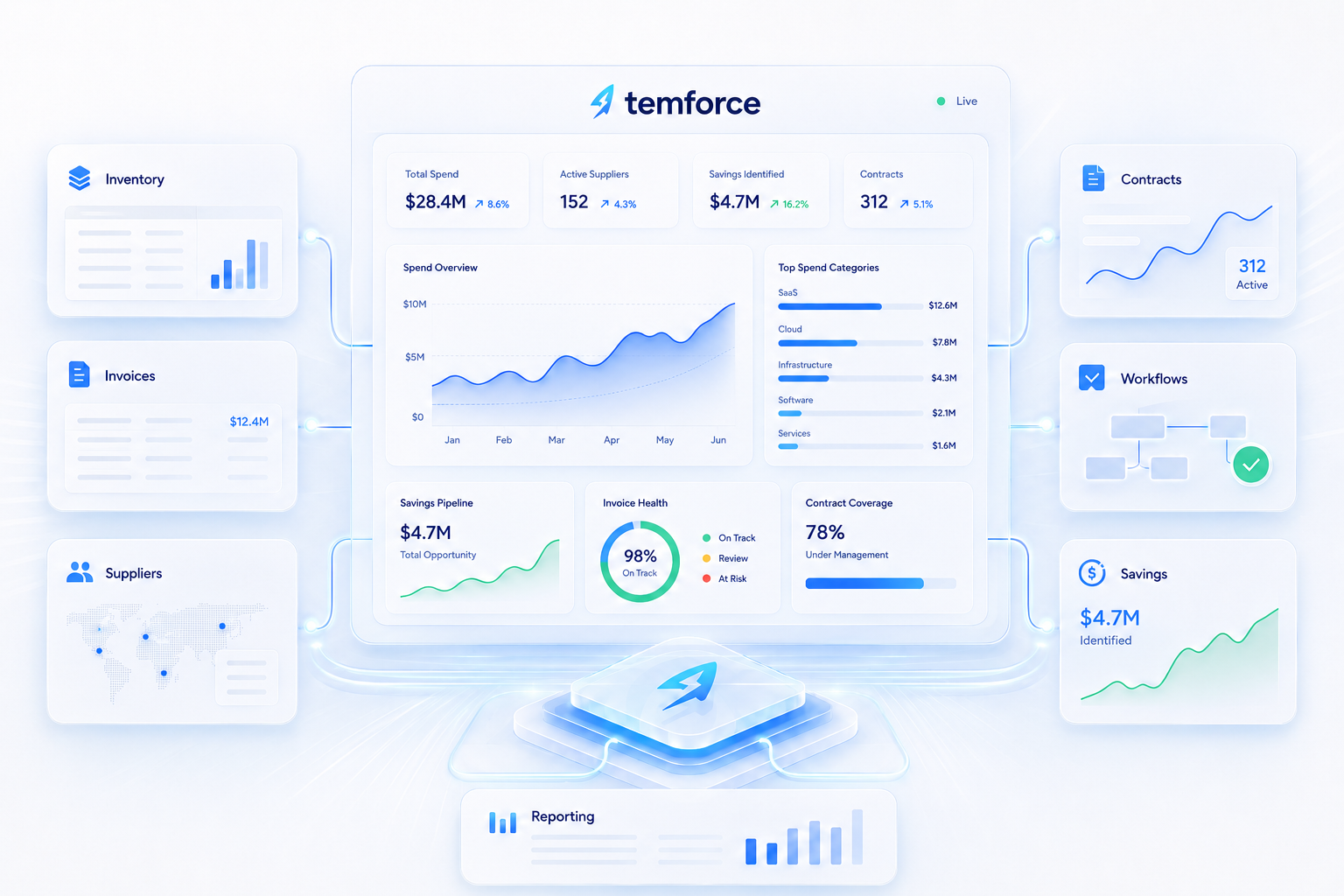
What is a TEM implementation plan?
A TEM implementation plan defines how the organization will move from fragmented technology expense activity into a structured operating model. It sets the scope, data priorities, supplier coverage, invoice controls, workflows, reporting cadence, and success measures needed for launch.
Identify the suppliers, billing accounts, invoices, inventory records, service categories, teams, countries, workflows, and reporting outputs that matter most.
Assign owners, workflows, approvals, supplier escalation paths, invoice review steps, reporting rhythms, and savings tracking responsibilities.
Connect implementation milestones to measurable outcomes such as invoice control, inventory health, supplier action, savings proof, reporting, and workflow adoption.
Implementation should create control early, then scale into TEMOps maturity.
Many TEM implementations stall because the project tries to solve every data problem before any business value is created. The stronger approach is to launch with a clear operating scope, connect the most important records and invoices first, and then improve completeness over time.
Temforce helps teams phase implementation around the work that creates control: inventory truth, invoice validation, supplier accountability, workflow execution, reporting, and savings proof.
A practical TEM rollout should move through six implementation phases.
A strong implementation does not wait for perfection. It creates a controlled launch path across discovery, data, invoices, workflows, reporting, and optimization.
Define suppliers, billing accounts, invoice types, service categories, stakeholders, reporting needs, pain points, savings goals, and launch priorities.
Map inventory, suppliers, billing accounts, contracts, owners, locations, cost centers, business units, and lifecycle status into a usable operating model.
Bring priority invoices into review, connect charges to suppliers and records, define exception logic, and establish approval and dispute handling.
Configure requests, approvals, tasks, supplier follow-up, disputes, disconnects, MACD activity, renewal actions, and operating ownership.
Launch dashboards and scheduled reports for spend, inventory, invoice exceptions, supplier issues, savings, renewals, open actions, and program health.
Expand coverage, improve data quality, automate more workflows, add AI insight, strengthen supplier governance, and track measurable ROI.
A phased TEM project timeline should look like a controlled rollout, not a big-bang migration.
This sample Gantt-style plan shows how a TEM implementation can move from discovery to operating control across roughly twelve weeks. Actual timing depends on scope, supplier complexity, invoice availability, data readiness, integrations, and internal approvals.
Tip: For complex environments, this timeline can be phased by supplier, business unit, country, invoice type, service category, or workflow area.
Before go-live, make sure the program has the right control points.
The strongest TEM implementations confirm readiness across data, invoices, suppliers, workflows, reporting, users, services, integrations, and savings proof.
| Control area | Implementation question | What good looks like |
|---|---|---|
| Scope | Which suppliers, invoices, service categories, business units, and users are included in the first launch? | A clear rollout scope with agreed priorities, excluded items, and phase-two candidates. |
| Inventory | Which fields are required to validate invoices, assign ownership, manage suppliers, and report spend? | A usable inventory model tied to suppliers, billing accounts, locations, cost centers, owners, contracts, and lifecycle status. |
| Invoices | Which invoices are being onboarded first and what validation rules or review steps are needed? | Priority billing accounts and invoice types connected to review, exception handling, approvals, disputes, and reporting. |
| Suppliers | Who owns supplier follow-up, escalation, correction requests, contract questions, and dispute resolution? | Supplier ownership, contacts, escalation paths, issue tracking, and resolution expectations are visible. |
| Workflows | How will requests, approvals, exceptions, disputes, disconnects, renewals, and supplier tasks move? | Configured workflows with owners, statuses, service levels, notification paths, and reporting visibility. |
| Reporting | What does leadership need to see after launch and how often should it be delivered? | Dashboards and scheduled reports for spend, inventory, invoice status, supplier issues, savings, renewals, and open actions. |
| Proof | How will credits, recoveries, avoided cost, recurring reductions, and supplier corrections be tracked? | A savings proof model that connects findings, actions, supplier responses, financial outcomes, and evidence. |
Implementation becomes easier when teams connect platform setup to real operating work.
Temforce helps teams launch with the core operating layers needed to control technology expense: inventory, invoices, workflows, reporting, and savings proof.
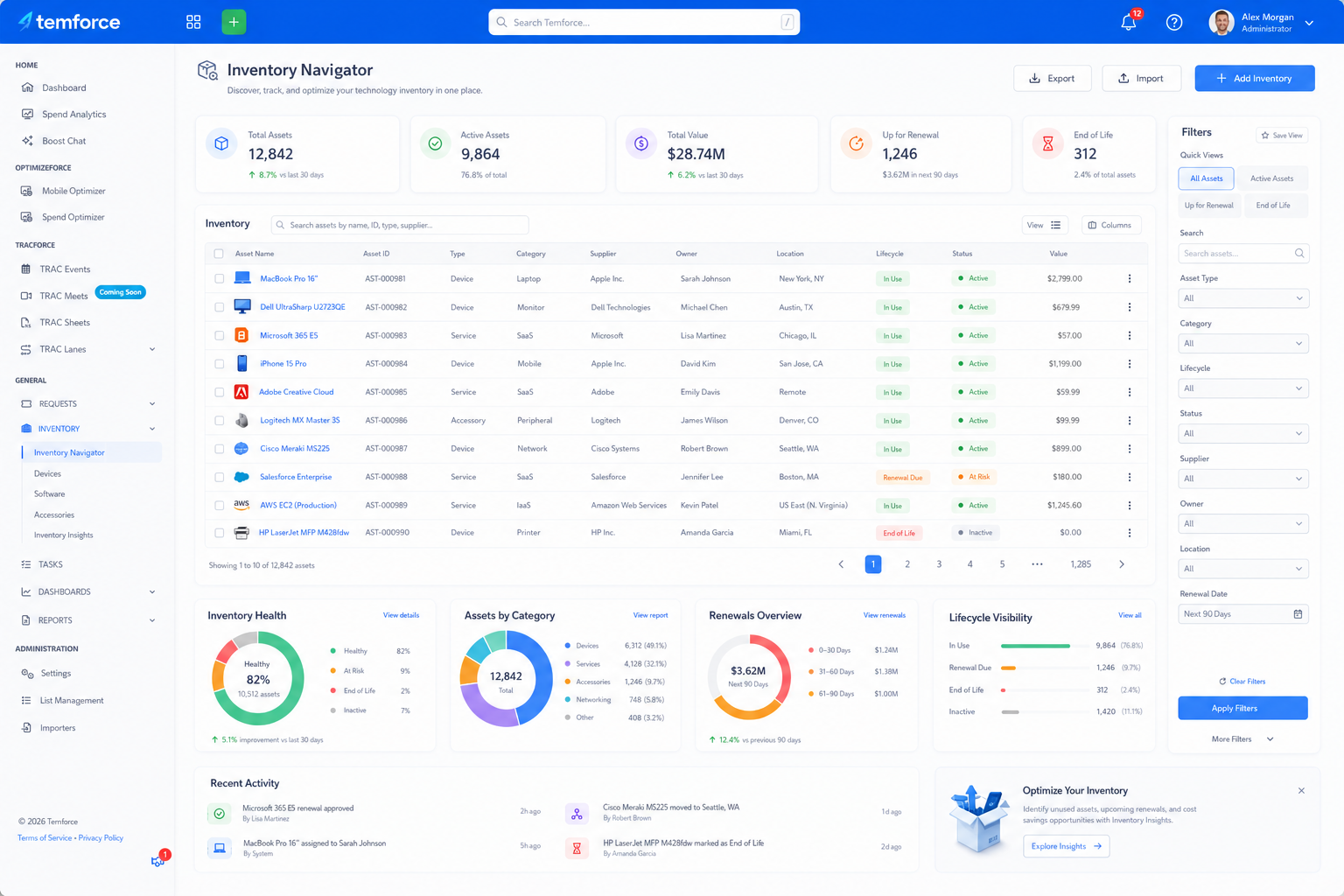
Build the inventory layer around operating use.
Inventory does not need to be perfect before launch, but it must be useful. The implementation should prioritize the fields and relationships needed for validation, ownership, supplier action, reporting, and savings.
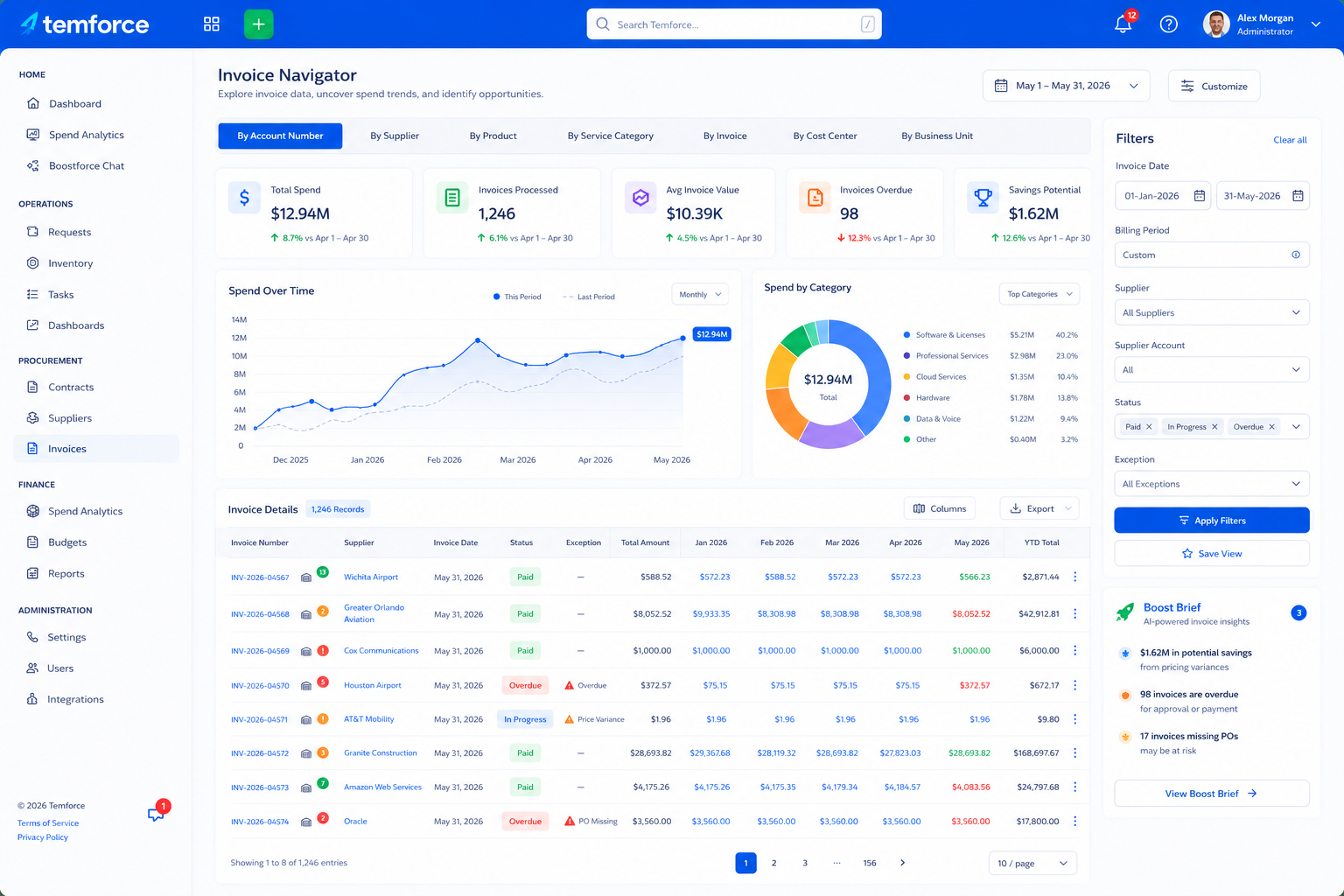
Launch invoice control where spend, risk, and volume matter most.
Invoice onboarding should be phased around the billing areas that create the most value. Start with priority suppliers and accounts, then expand coverage as workflows and reporting mature.
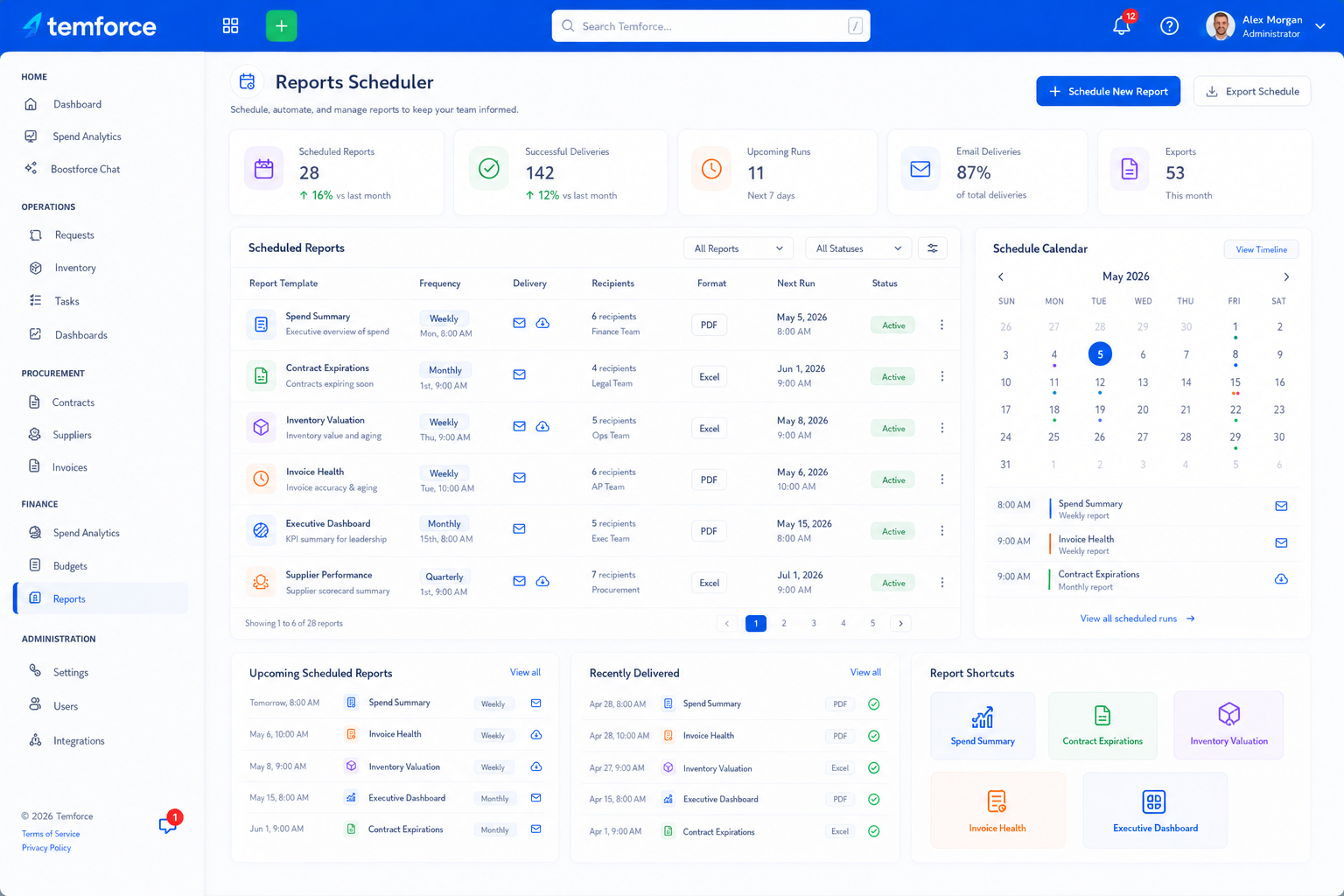
Use reporting to create the operating rhythm after launch.
Reporting should be designed before go-live so teams know what progress, risk, issues, savings, and open actions need to be visible after launch.
Explore the full Technology Expense Management guide.
Move through the full guide path from TEM basics into benefits, readiness, solution design, strategy, platform maturity, ROI, and implementation planning.
What Is TEM?
Understand the meaning of Telecom Expense Management and how modern TEM evolved into a broader operating model for technology expense control.
TEM Benefits
See how TEM improves inventory accuracy, invoice control, supplier accountability, savings proof, governance, and executive visibility.
TEM Readiness
Learn what needs to be in place before launching, replacing, or improving a TEM program across data, owners, suppliers, and invoices.
TEM Solution
Understand what a TEM solution should manage and how software, services, workflows, reports, and operating support fit together.
TEM Strategy
Build a stronger operating model for telecom and technology expense control with governance, sourcing, supplier management, and savings proof.
Modern TEM Platform
See what a modern TEM platform should connect across software, services, inventory, invoices, suppliers, workflows, AI, reporting, and TEMOps execution.
TEM ROI
Measure TEM value through recoveries, credits, avoided cost, disconnect savings, supplier correction, time savings, and operating efficiency.
TEM Implementation Plan
See how to roll out TEM in a practical way by aligning inventory, invoices, suppliers, contracts, workflows, owners, and reporting.
TEM Implementation Plan FAQ.
Use these answers to understand how to plan, launch, and phase a Telecom Expense Management implementation.
What is a TEM implementation plan?
A TEM implementation plan defines how an organization will launch or improve Telecom Expense Management across inventory, invoices, suppliers, contracts, workflows, owners, reporting, savings proof, and governance.
How long does a TEM implementation take?
A TEM implementation timeline depends on scope, data readiness, invoice complexity, supplier count, integrations, reporting requirements, and internal approvals. A phased launch can often begin with priority suppliers, invoices, workflows, and reports before expanding into broader maturity.
What should be included in a TEM implementation?
A TEM implementation should include scope definition, data intake, inventory mapping, invoice onboarding, supplier setup, contract context, workflow configuration, reporting, user readiness, savings tracking, and post-launch optimization.
Does TEM implementation require perfect data?
No. TEM implementation does not require perfect data before launch. It requires enough trusted records to create control, validate invoices, assign ownership, manage suppliers, report progress, and improve data quality over time.
How does Temforce support TEM implementation?
Temforce supports TEM implementation with SaaS software, managed services, inventory management, invoice control, supplier accountability, workflow execution, reporting, Boostforce AI, approved API access, savings tracking, and TEMOps expertise.
Launch TEM with a plan that creates control from day one.
Temforce helps teams implement technology expense management with inventory truth, invoice control, supplier accountability, workflow execution, managed services, reporting, savings proof, Boostforce AI, approved APIs, and TEMOps operating discipline.
