
What Is TEM? Telecom Expense Management Explained for modern technology spend.
TEM stands for Telecom Expense Management. It helps organizations manage telecom services, technology inventory, invoices, suppliers, contracts, lifecycle activity, reporting, and savings proof. Modern TEM has expanded beyond bill checking into a broader operating discipline for technology expense control.
The strongest TEM programs connect what exists, what is billed, who owns action, what suppliers owe, what contracts require, what changed, and how savings can be proven.
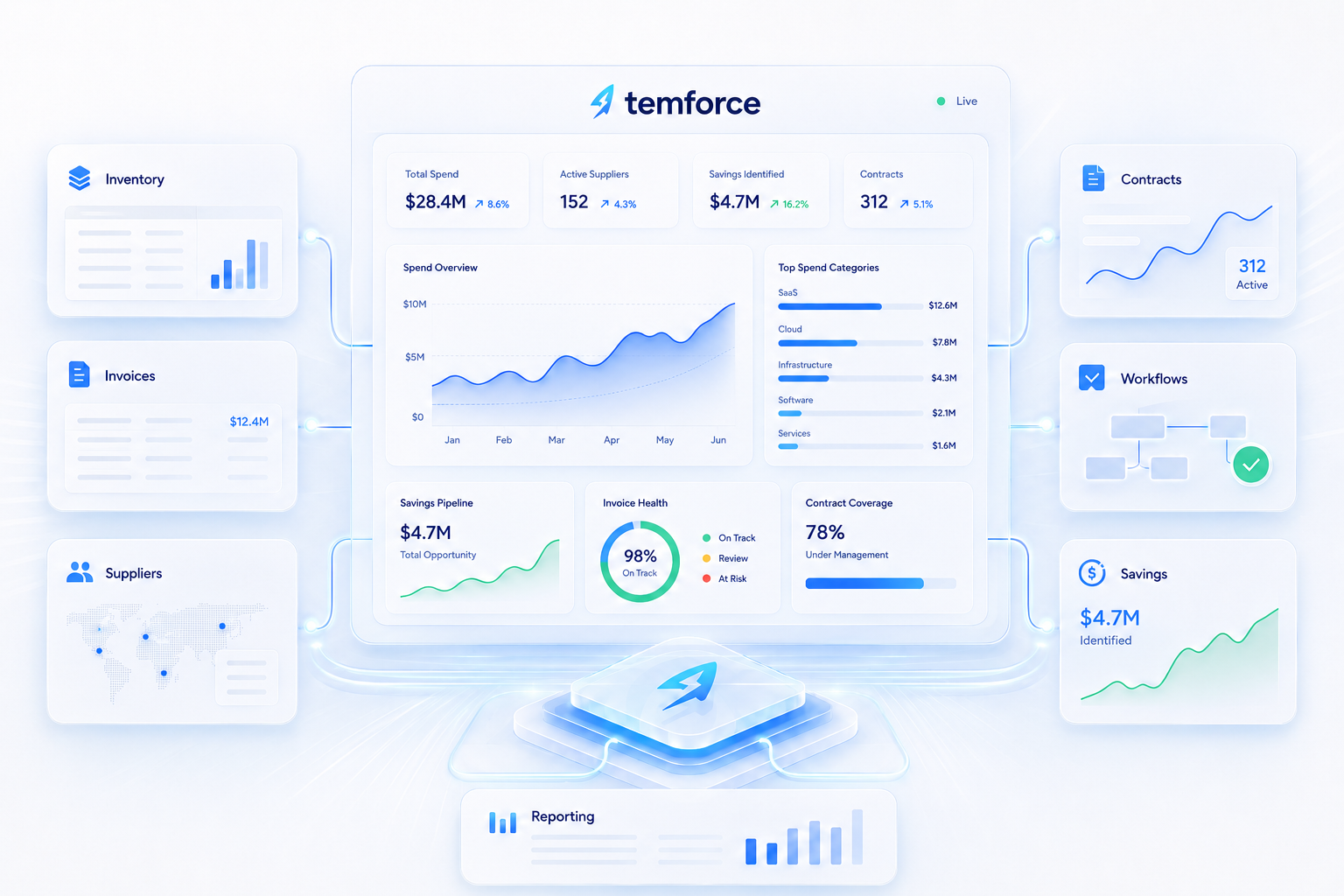
What does TEM mean?
TEM means Telecom Expense Management. It is the practice of managing telecom and technology-related services, costs, contracts, inventory, invoices, suppliers, workflows, and reporting so organizations can control recurring spend with confidence.
Traditional TEM focused on carrier bills, telecom services, mobile lines, fixed voice, network circuits, billing accuracy, disputes, credits, and contract compliance.
Modern TEM expands the discipline to include inventory, workflow governance, supplier accountability, contract context, spend analytics, reporting, AI, APIs, and operational execution.
The strongest TEM programs connect inventory truth, invoice validation, supplier action, lifecycle workflows, contract governance, savings proof, and executive visibility.
TEM is no longer just about checking telecom bills. It is about operating control.
Most organizations do not lose control because they lack effort. They lose control because the records, invoices, suppliers, contracts, owners, tasks, reports, and savings evidence are scattered across too many disconnected places.
Temforce helps bring those pieces into one connected platform so technology expense management can operate with better visibility, accountability, and proof.
Explore the full Technology Expense Management guide.
Use this guide path to move from the basics of TEM into benefits, readiness, solutions, strategy, platform maturity, ROI, and implementation planning. Each page connects old-school Telecom Expense Management to modern TEMOps execution.
What Is TEM?
Understand the meaning of Telecom Expense Management and how modern TEM evolved into a broader operating model for technology expense control.
TEM Benefits
See how TEM improves inventory accuracy, invoice control, supplier accountability, savings proof, governance, and executive visibility.
TEM Readiness
Learn what needs to be in place before launching, replacing, or improving a TEM program across data, owners, suppliers, and invoices.
TEM Solution
Understand what a TEM solution should manage and how software, services, workflows, reports, and operating support fit together.
TEM Strategy
Build a stronger operating model for telecom and technology expense control with governance, sourcing, supplier management, and savings proof.
Modern TEM Platform
See what a modern TEM platform should connect across software, services, inventory, invoices, suppliers, workflows, AI, reporting, and TEMOps execution.
TEM ROI
Measure TEM value through recoveries, credits, avoided cost, disconnect savings, supplier correction, time savings, and operating efficiency.
TEM Implementation Plan
See how to roll out TEM in a practical way by aligning inventory, invoices, suppliers, contracts, workflows, owners, and reporting.
What does a TEM system manage?
A TEM platform gives teams a central place to manage the records, workflows, financial controls, suppliers, contracts, and reporting tied to telecom and technology services.
Track circuits, mobile lines, services, devices, billing accounts, locations, cost centers, owners, suppliers, and lifecycle status.
Review billing records, validate charges, track exceptions, route approvals, manage disputes, capture credits, and support recoveries.
Manage supplier accountability, billing accounts, escalation paths, correction requests, follow-up, contract obligations, and performance history.
Connect contract terms, renewal windows, pricing context, commitments, supplier obligations, and sourcing opportunities to operating records.
Move service requests, approvals, disconnects, moves, adds, changes, tasks, supplier follow-up, and renewal actions into structured execution.
Track opportunities, actions, supplier corrections, disconnect savings, credits, recoveries, avoided cost, and measurable financial outcomes.
The strongest TEM programs connect records to action and action to proof.
Temforce helps teams move from fragmented telecom expense work to a connected operating model across inventory, invoices, suppliers, contracts, workflows, reports, savings, AI, and services.
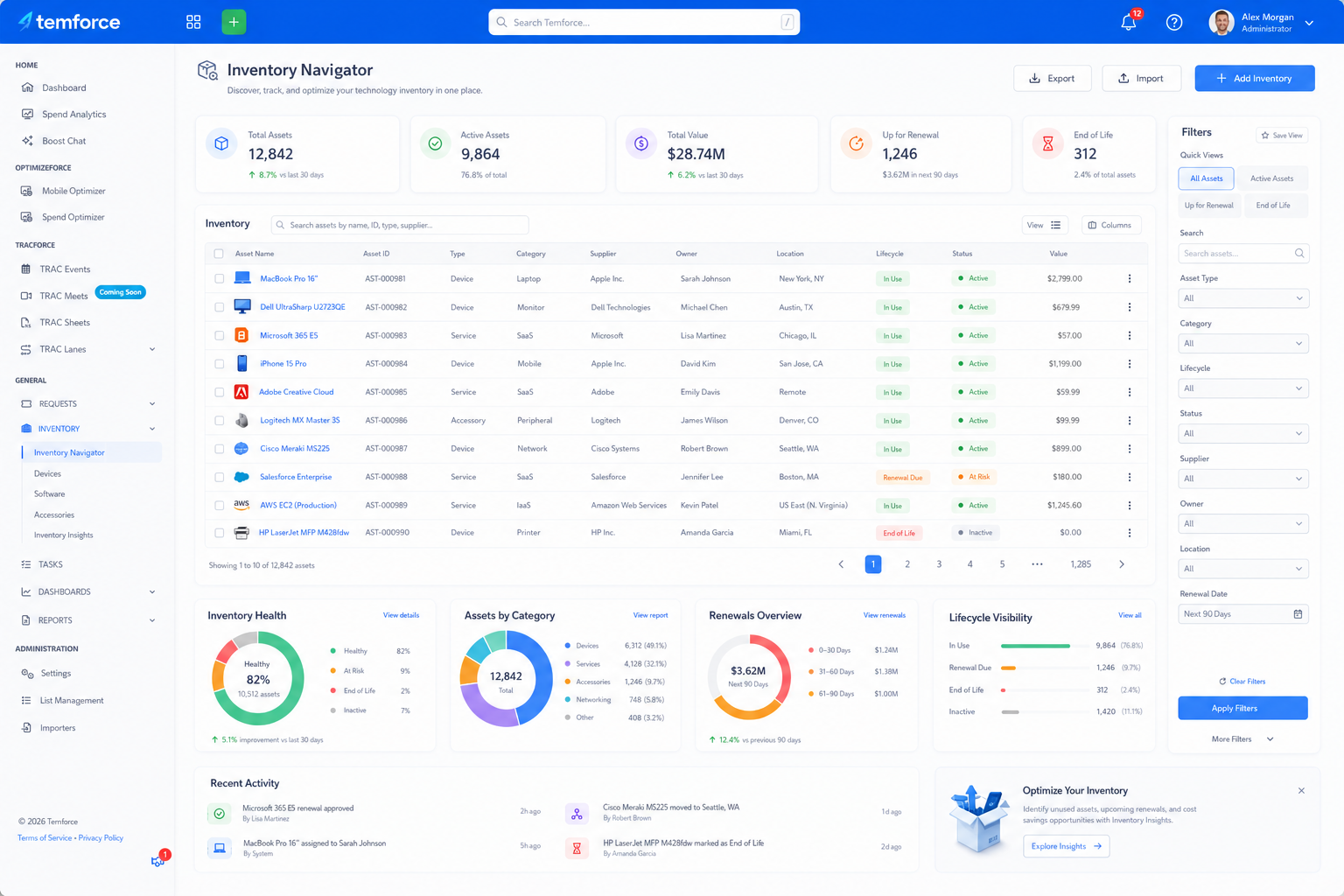
Know what exists before you approve what is billed.
TEM control starts with trusted inventory. Without clean records, teams struggle to validate invoices, manage suppliers, prepare sourcing events, support renewals, and prove savings.
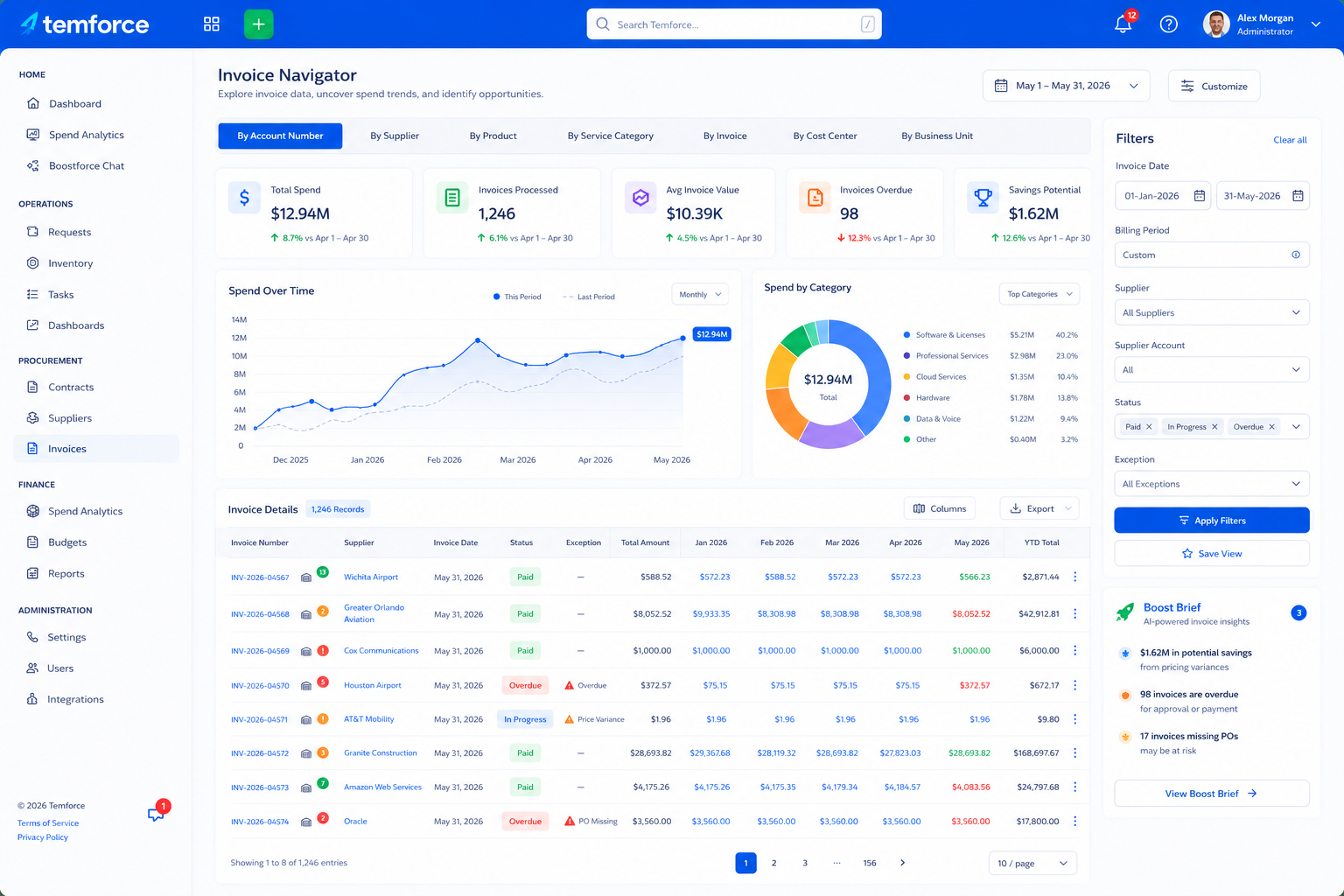
Invoice validation is stronger when billing connects to operating context.
Modern TEM does not treat invoices as isolated bills. It connects charges to inventory, suppliers, contracts, locations, owners, approvals, disputes, credits, recoveries, and reporting.
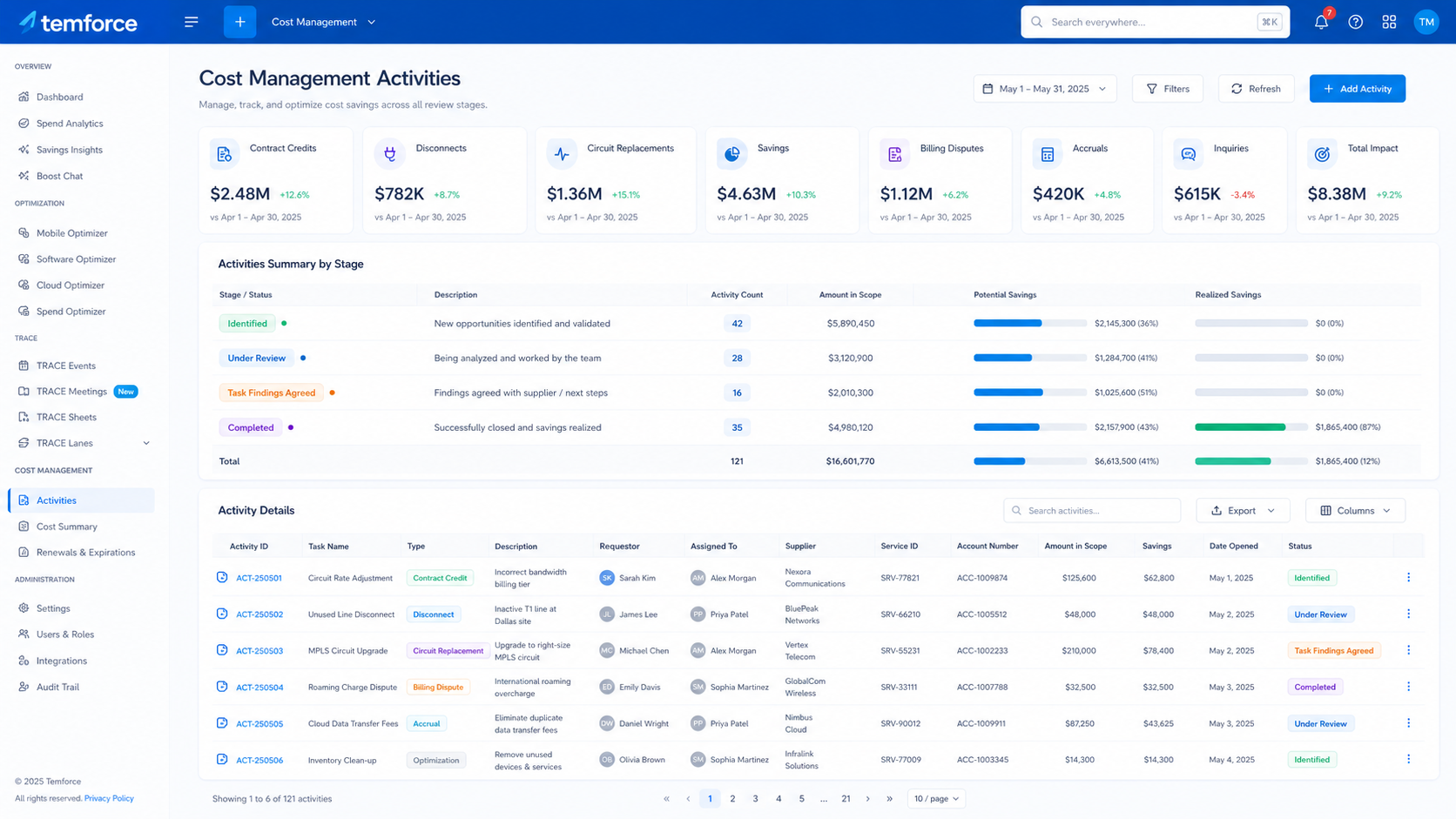
A savings opportunity is not the same as a proven outcome.
Modern TEM programs need to connect the finding, action, supplier outcome, credit, recovery, disconnect, avoided cost, or recurring reduction to evidence leadership can trust.
Telecom Expense Management vs Technology Expense Management.
Telecom Expense Management began with telecom services and carrier billing. Technology Expense Management expands the discipline to the broader technology services, assets, platforms, workflows, suppliers, and recurring operational costs that organizations need to control.
| Area | Telecom Expense Management | Technology Expense Management |
|---|---|---|
| Primary focus | Telecom services, carrier billing, mobile lines, fixed voice, circuits, and network services. | Broader technology services, assets, recurring costs, cloud, software, telecom, mobility, infrastructure, and operational spend. |
| Core records | Billing accounts, circuits, mobile lines, carrier services, contracts, locations, and cost centers. | Technology assets, services, suppliers, contracts, workflows, budgets, owners, invoices, usage, and reporting context. |
| Key workflows | Invoice validation, disputes, carrier follow-up, MACD, inventory cleanup, and contract compliance. | Expense governance, lifecycle management, supplier accountability, approvals, optimization, reporting, integrations, and AI-supported execution. |
| Operating goal | Control telecom costs and improve billing accuracy. | Control technology expense operations across services, suppliers, workflows, data, reporting, and savings proof. |
TEMOps is the operating discipline behind modern technology expense management.
TEMOps connects the people, process, data, suppliers, contracts, invoices, workflows, reporting, savings evidence, and governance required to move technology expense management from visibility to execution.
It is the difference between seeing expense data and running the operational work needed to control it.
Control slips when telecom expense work is scattered across disconnected systems.
TEM matters because recurring technology and telecom spend is complex. Without structure, teams lose visibility into what exists, what is billed, what suppliers owe, what contracts require, what actions are open, and what savings were actually achieved.
Teams struggle when telecom records live in spreadsheets, carrier portals, old exports, email threads, invoice files, and disconnected systems.
Charges are harder to validate when billing is not connected to inventory, contracts, locations, cost centers, owners, and supplier context.
Requests, disputes, renewals, disconnects, approvals, supplier follow-up, and savings opportunities need visible ownership and workflow discipline.
Supplier issues, correction requests, credits, disputes, and contract obligations are harder to manage when follow-up lives in inboxes.
Renewals create risk when inventory, pricing, usage, obligations, spend, supplier performance, and business requirements are not connected.
Finance and leadership need evidence that connects findings, actions, outcomes, credits, recoveries, avoided cost, and recurring reductions.
Temforce connects software, services, AI, and Academy learning into one TEMOps path.
TEM is strongest when teams have a platform to manage the work, services to help execute it, AI to support better insight, and learning to strengthen the people behind the process.
Manage inventory, invoices, suppliers, contracts, workflows, savings, reports, dashboards, AI, APIs, and support in one platform.
Explore software → Managed Services Support for the work behind the platform.Use Temforce services for invoice management, audits, inventory cleanup, supplier follow-up, sourcing, contracts, reporting, and TEMOps execution.
Explore services → Boostforce AI AI built around operating context.Use page-aware summaries, conversational data exploration, supplier insight, benchmarking, spend analysis, contract intelligence, and guided optimization.
Explore Boostforce AI → Academy Learning for the people doing the work.Build practical TEMOps skills across inventory, invoices, suppliers, contracts, governance, reporting, savings, and operating leadership.
Explore Academy →Telecom Expense Management FAQ.
Use these answers to understand what TEM means, what TEM systems manage, why TEM matters, and how modern TEM connects to technology expense management and TEMOps execution.
What does TEM stand for?
TEM stands for Telecom Expense Management. It is the practice of managing telecom and technology-related services, invoices, inventory, suppliers, contracts, workflows, reporting, and savings activity.
What is Telecom Expense Management?
Telecom Expense Management helps organizations control telecom costs by managing carrier services, mobile lines, circuits, invoices, billing accuracy, contracts, supplier accountability, disputes, credits, recoveries, inventory, and reporting.
What does a TEM system manage?
A TEM system manages telecom inventory, billing accounts, invoices, suppliers, contracts, approvals, requests, MACD activity, disputes, credits, recoveries, savings actions, reporting, and governance workflows.
How is TEM different from Technology Expense Management?
Telecom Expense Management traditionally focuses on telecom services and carrier billing. Technology Expense Management expands the discipline to broader technology services, assets, platforms, suppliers, workflows, contracts, reporting, and recurring operational spend.
Why does inventory matter in TEM?
Inventory matters because teams cannot validate invoices, manage suppliers, plan renewals, support sourcing, identify waste, or prove savings with confidence unless they know what services exist, who owns them, who bills them, where they live, and what they should cost.
What is TEMOps?
TEMOps is the operating discipline behind modern technology expense management. It connects inventory truth, invoice validation, supplier accountability, lifecycle workflows, contract governance, savings proof, reporting, and team execution.
How does Temforce support TEM?
Temforce supports TEM with SaaS software, managed services, inventory management, invoice control, supplier accountability, contract context, workflow execution, savings tracking, reporting, Boostforce AI, API integration, and Temforce Academy learning.
Move from old-school TEM to TEMOps execution.
Temforce helps organizations control technology expense management and telecom expense management with inventory truth, invoice validation, supplier accountability, lifecycle workflows, managed services, Boostforce AI, approved APIs, savings tracking, dashboards, reporting, and TEMOps learning.
