
TEM Solution: What a Modern Telecom Expense Management Platform Should actually solve.
A TEM solution should help organizations manage the operating work behind telecom and technology expense control, including inventory, invoices, suppliers, contracts, workflows, reporting, savings proof, services, AI, and implementation support.
The right solution connects the records, bills, people, suppliers, contracts, actions, reports, and proof needed to run technology expense management with accountability.
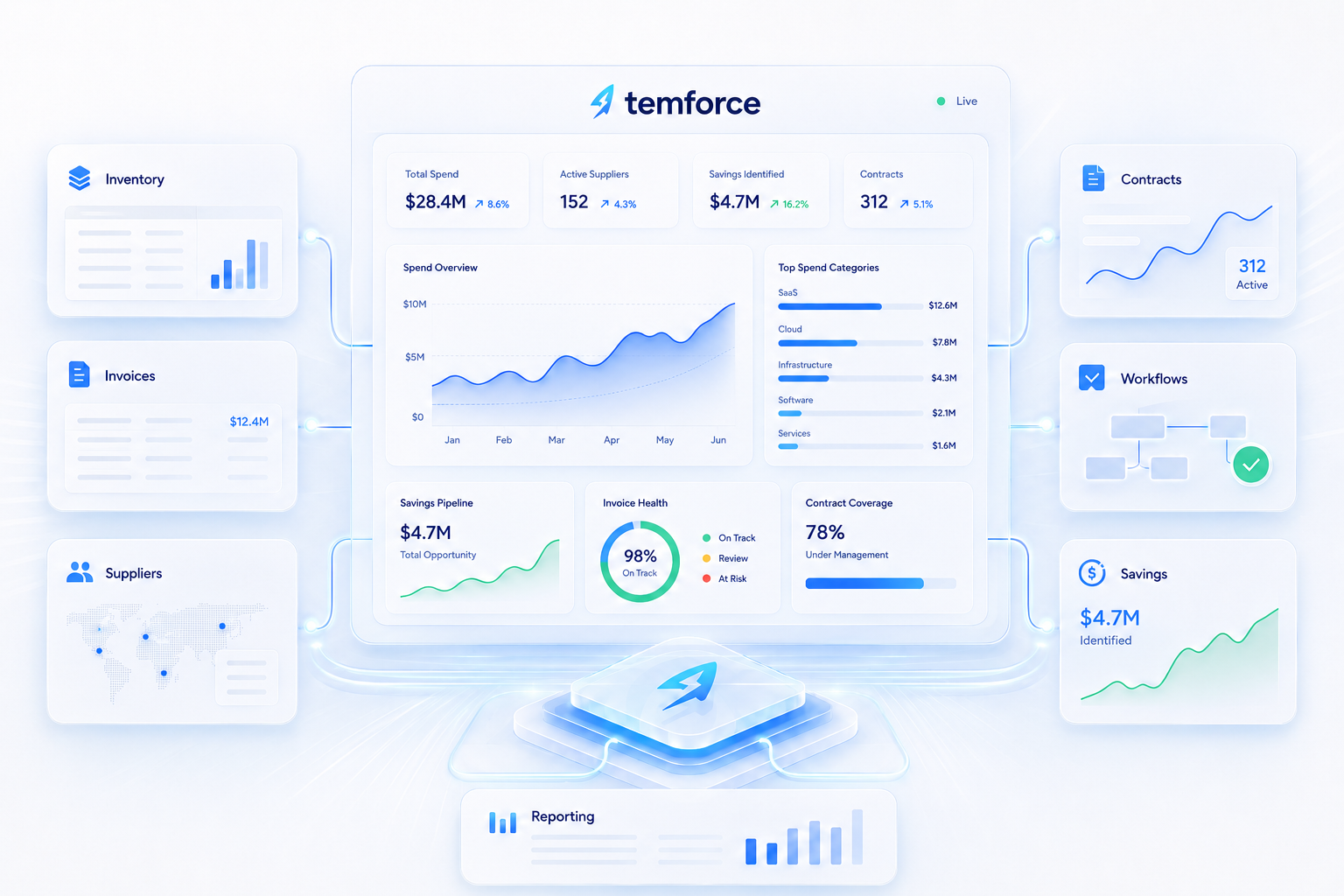
What is a TEM solution?
A TEM solution is the combination of software, services, process, data, workflow, reporting, and expertise used to manage telecom and technology expense operations. It should help teams understand what exists, validate what is billed, assign action, manage suppliers, track savings, and prove outcomes.
TEM software should organize inventory, invoices, suppliers, contracts, requests, tasks, reporting, savings, dashboards, AI, and integration activity in one operating platform.
Managed TEM services help with invoice review, audits, supplier follow-up, inventory cleanup, sourcing support, contract review, reporting, and TEMOps execution.
A strong TEM solution defines ownership, workflows, review cadences, escalation paths, savings methods, reporting expectations, and governance rhythms.
The best TEM solution connects visibility, action, and proof into one operating system.
Many TEM programs fail because the solution is treated as a reporting layer. Reporting matters, but reporting without connected workflow does not fix invoices, clean inventory, hold suppliers accountable, manage renewals, or prove savings.
Temforce approaches TEM as an operating discipline. The platform connects software, services, AI, approved APIs, reporting, and TEMOps learning so teams can move from scattered data to accountable execution.
A modern TEM solution should support the full technology expense lifecycle.
TEM works best when inventory, invoices, suppliers, contracts, workflows, savings, reporting, AI, and integrations work together instead of living in separate systems, portals, spreadsheets, and inboxes.
Manage services, assets, billing accounts, suppliers, owners, locations, cost centers, lifecycle status, and contract context.
Connect invoices to inventory, suppliers, billing accounts, contracts, approvals, exceptions, disputes, credits, recoveries, and reporting.
Track supplier contacts, escalation paths, issue history, correction requests, contract obligations, billing accounts, and outcomes.
Manage contract terms, amendments, commitments, pricing context, renewal windows, obligations, and sourcing opportunities.
Route requests, approvals, MACD activity, disconnects, supplier follow-up, invoice exceptions, renewals, and lifecycle actions.
Track credits, recoveries, avoided cost, disconnect savings, optimization actions, supplier corrections, and recurring reductions.
What separates a real TEM solution from a partial tool?
A partial tool may store data or process invoices. A complete TEM solution connects the operating work required to control technology expense over time.
| Area | Partial TEM tool | Modern TEM solution |
|---|---|---|
| Inventory | Stores records but may not connect them to invoices, owners, suppliers, contracts, and lifecycle actions. | Creates an operating record tied to billing, suppliers, contracts, ownership, workflow, reporting, and savings proof. |
| Invoices | Processes bills or flags exceptions without enough operational context. | Connects invoices to inventory, suppliers, contracts, approvals, disputes, credits, recoveries, and reporting. |
| Suppliers | Stores vendor names and contacts but does not manage follow-up as accountable work. | Tracks supplier issues, obligations, escalations, correction requests, contract context, and outcomes. |
| Workflows | Leaves requests, approvals, disputes, and follow-up in inboxes, spreadsheets, and portals. | Creates visible ownership for tasks, approvals, MACD, disconnects, renewals, exceptions, and lifecycle actions. |
| Savings | Reports estimated savings without connecting action, evidence, and financial outcomes. | Connects findings, actions, credits, recoveries, avoided cost, supplier corrections, and recurring reductions. |
| Support | Relies on the customer to turn software output into operating action. | Combines software, managed services, AI, reporting, APIs, and TEMOps expertise to help teams run the work. |
The right TEM solution turns fragmented work into structured execution.
Temforce helps teams connect the operational layers behind telecom and technology expense control so teams can act with confidence.
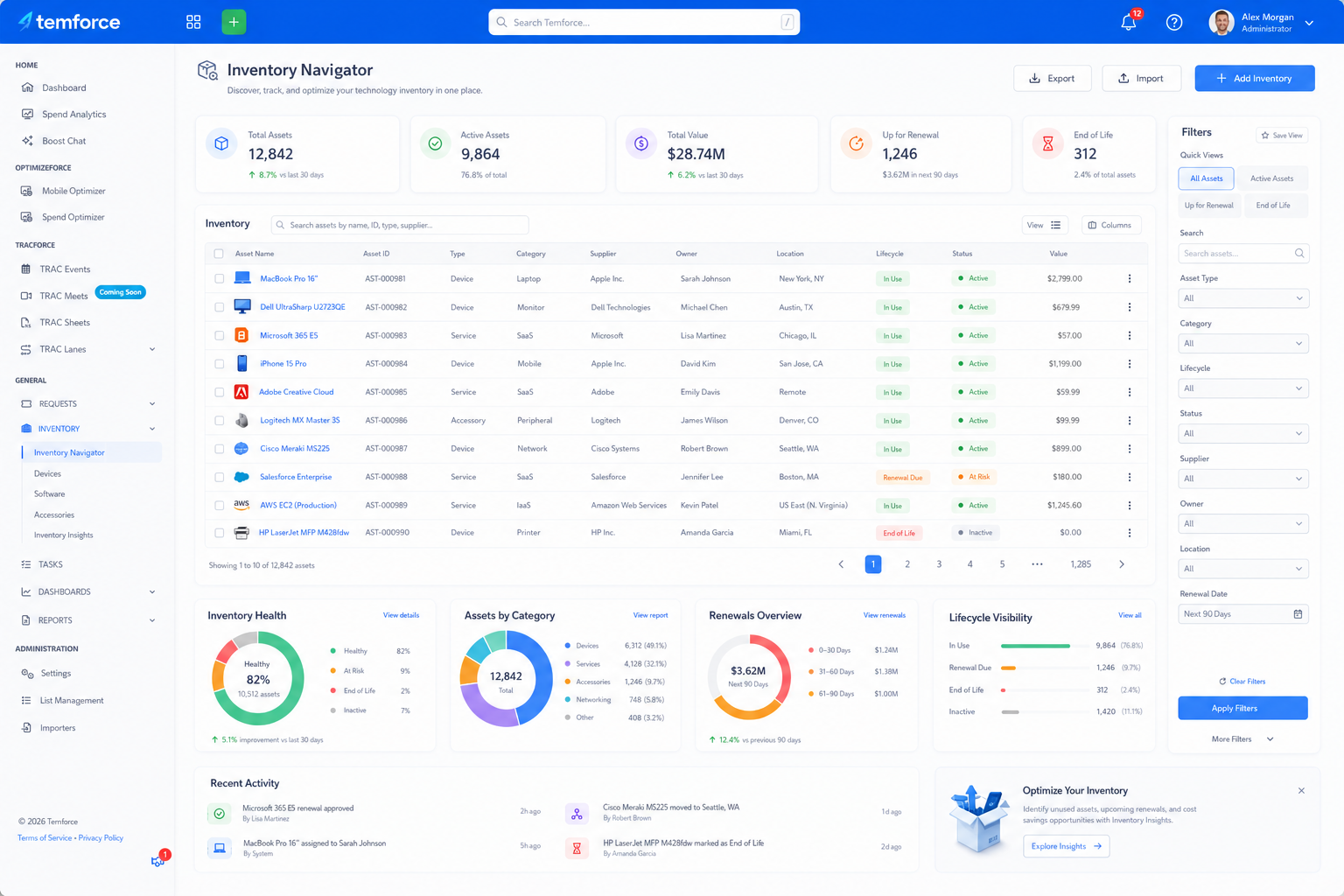
A solution needs inventory truth before it can deliver invoice confidence.
Inventory is the foundation for modern TEM. Without a trusted operating record, teams cannot validate recurring charges, manage suppliers, plan sourcing, review renewals, or prove savings with confidence.
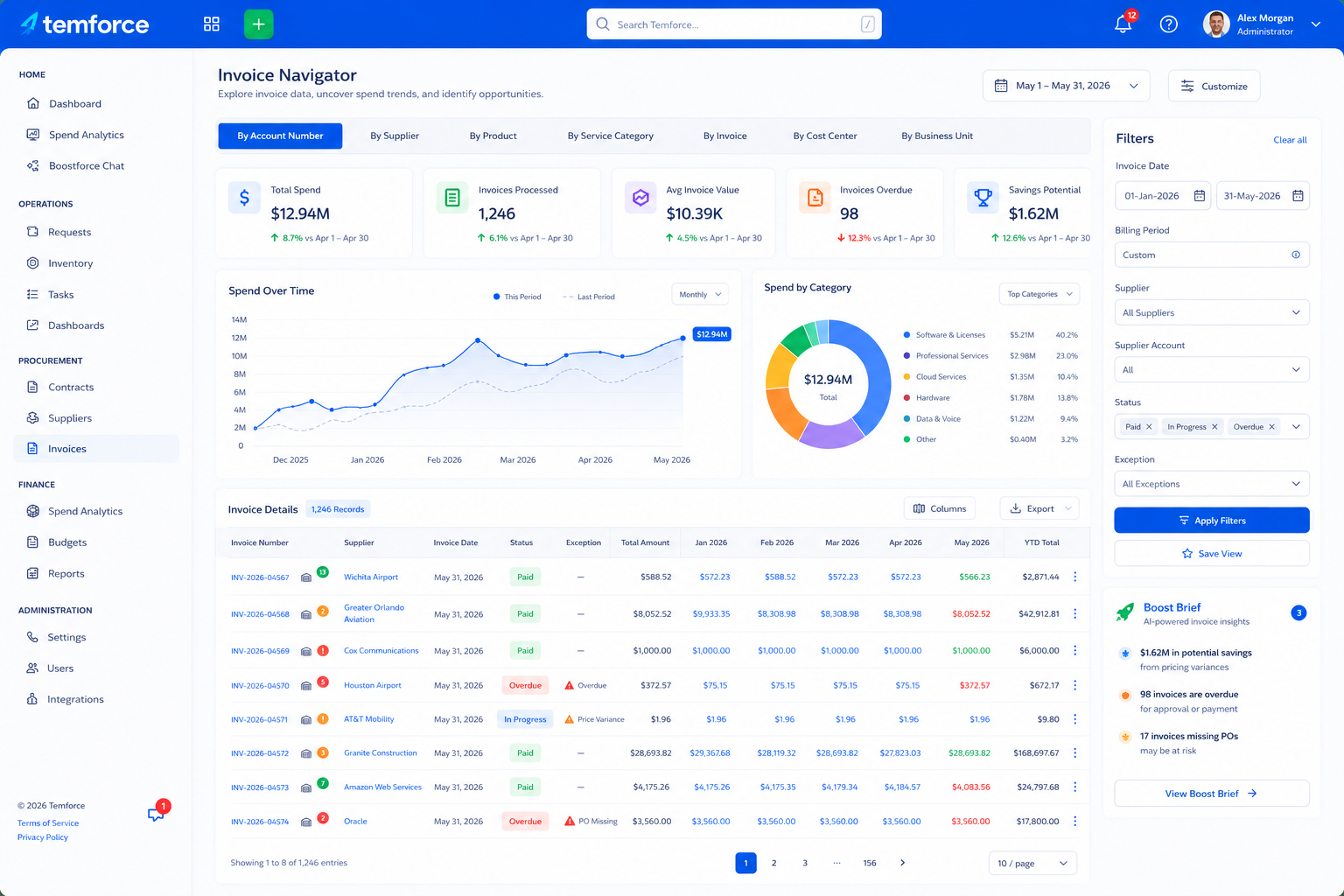
A solution needs invoice control that connects charges to operating context.
Invoice management becomes stronger when billing records are tied to inventory, contracts, suppliers, cost centers, owners, exceptions, disputes, credits, recoveries, and approvals.
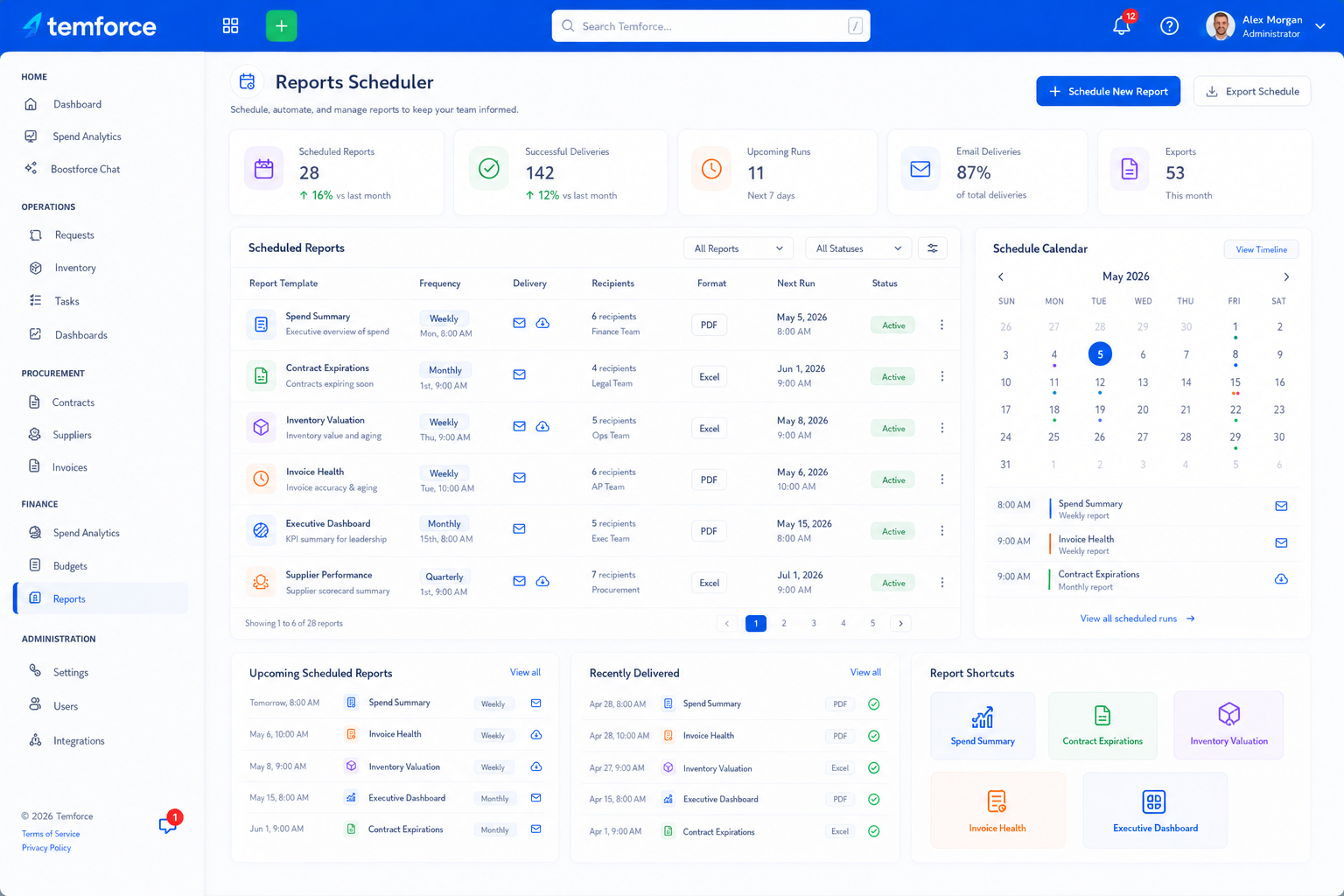
A solution needs reporting that proves what changed.
Reporting should not be a static export. It should show leadership the operating story behind spend, issues, supplier work, exceptions, renewals, savings, and progress.
Continue the Technology Expense Management guide.
Move through the full guide path from TEM basics into benefits, readiness, solution design, strategy, platform maturity, ROI, and implementation planning.
What Is TEM?
Understand the meaning of Telecom Expense Management and how modern TEM evolved into a broader operating model for technology expense control.
TEM Benefits
See how TEM improves inventory accuracy, invoice control, supplier accountability, savings proof, governance, and executive visibility.
TEM Readiness
Learn what needs to be in place before launching, replacing, or improving a TEM program across data, owners, suppliers, and invoices.
TEM Solution
Understand what a TEM solution should manage and how software, services, workflows, reports, and operating support fit together.
TEM Strategy
Build a stronger operating model for telecom and technology expense control with governance, sourcing, supplier management, and savings proof.
Modern TEM Platform
See what a modern TEM platform should connect across software, services, inventory, invoices, suppliers, workflows, AI, reporting, and TEMOps execution.
TEM ROI
Measure TEM value through recoveries, credits, avoided cost, disconnect savings, supplier correction, time savings, and operating efficiency.
TEM Implementation Plan
See how to roll out TEM in a practical way by aligning inventory, invoices, suppliers, contracts, workflows, owners, and reporting.
TEM Solution FAQ.
Use these answers to understand what a TEM solution should include and how Temforce supports the operating model behind technology expense control.
What is a TEM solution?
A TEM solution is the combination of software, services, process, data, workflow, reporting, and expertise used to manage telecom and technology expense operations.
What should a TEM solution manage?
A TEM solution should manage inventory, invoices, suppliers, contracts, requests, approvals, disputes, credits, recoveries, renewals, reporting, savings, workflow execution, and governance.
Is TEM software enough by itself?
TEM software is important, but many organizations also need operating support, managed services, data cleanup, invoice review, supplier follow-up, reporting, and process governance to create sustained control.
How is a modern TEM solution different from a traditional TEM tool?
A modern TEM solution connects inventory, invoices, suppliers, contracts, workflows, reporting, savings proof, AI, APIs, and managed services instead of treating TEM as only invoice processing or data storage.
How does Temforce support a TEM solution?
Temforce supports a TEM solution with SaaS software, managed services, inventory management, invoice control, supplier accountability, contract context, workflow execution, savings tracking, reporting, Boostforce AI, approved API access, and TEMOps learning.
Choose a TEM solution that connects software, services, and execution.
Temforce helps teams move from scattered telecom expense work into a connected operating model for inventory truth, invoice control, supplier accountability, workflow execution, savings proof, reporting, AI, and managed services.
