
Understand TEM software pricing by looking at operating value.
TEM software pricing should be evaluated against the work the platform helps control: inventory truth, invoice validation, supplier accountability, contracts, workflows, savings proof, Boostforce AI, ready-built APIs, application customization, dedicated support, and reporting.
TEM software pricing should not be judged by license cost alone. It should be compared to the waste, billing errors, manual work, supplier friction, and missed savings the platform can help control.
Most TEM pricing conversations start with software cost. The better conversation starts with operating scope. A larger telecom and technology environment needs stronger inventory governance, invoice validation, supplier follow-up, workflow visibility, reporting, support, AI, APIs, and savings proof.
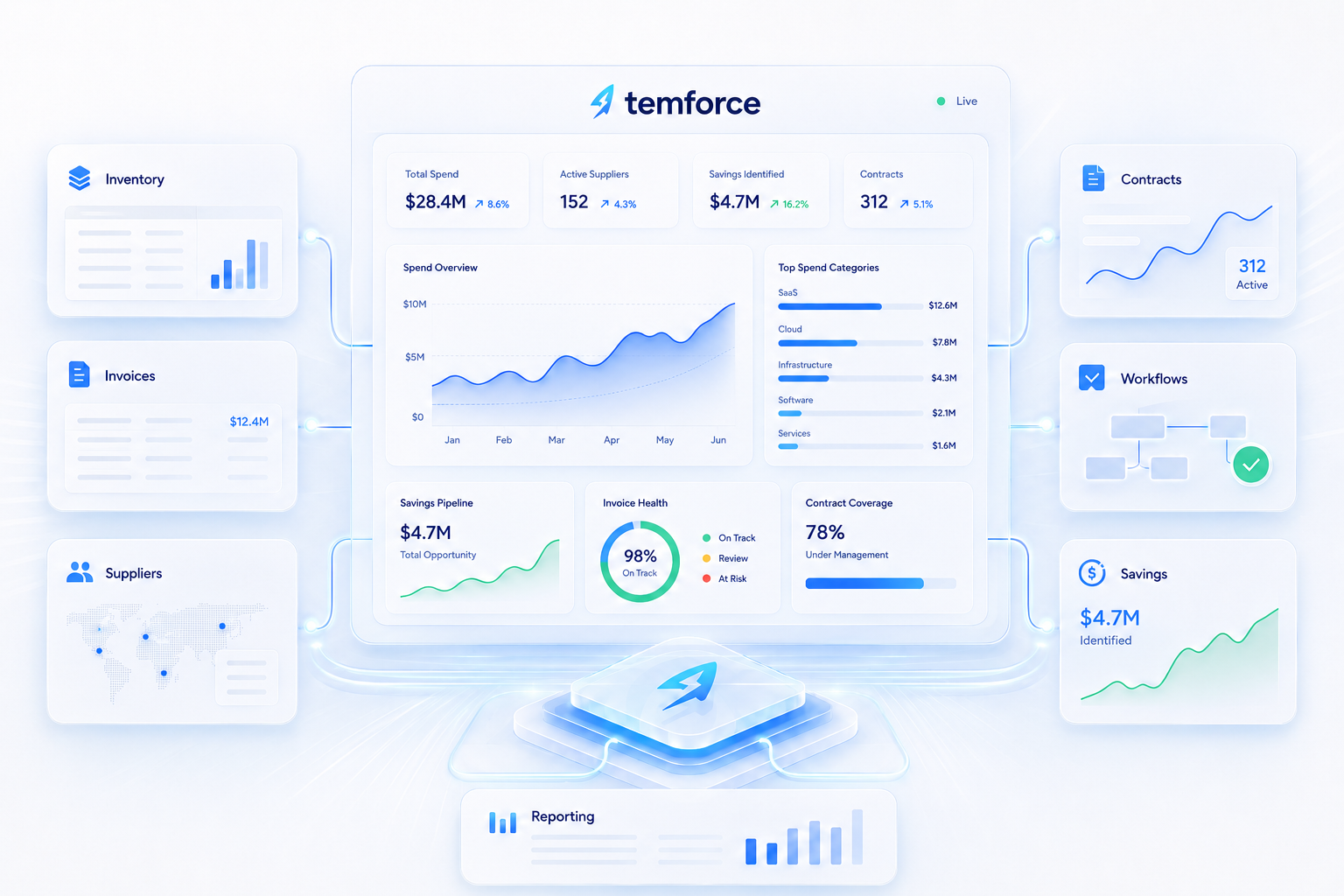
Pricing may depend on suppliers, billing accounts, invoices, inventory records, users, workflows, integrations, reporting needs, and support expectations.
Pricing should reflect invoice validation, supplier disputes, contracts, MCAD workflows, finance validation, AI, APIs, customization, and dedicated support.
Compare pricing against savings, credits, recoveries, avoided waste, billing corrections, inventory cleanup, workflow efficiency, and executive visibility.
What affects TEM software pricing?
TEM software pricing usually depends on the size and complexity of the technology expense environment, the data that needs to be managed, the workflows that need to be governed, and the support model required after launch.
Pricing can be influenced by telecom inventory records, billing accounts, suppliers, invoice volume, service categories, locations, and reporting scope.
Pricing should reflect the level of invoice validation, approvals, disputes, supplier follow-up, MCAD activity, renewals, disconnects, and savings governance required.
Pricing may vary based on integration needs, application customization, reporting requirements, Boostforce AI use cases, dedicated support, and implementation complexity.
What TEM software pricing should help justify.
A practical pricing conversation should connect platform cost to operating outcomes. Temforce is built to help teams manage the work that drives those outcomes.
Trusted inventory helps teams understand what exists, who owns it, what supplier bills it, what contract applies, and what should happen next.
Invoice validation connects bills to inventory, billing accounts, contracts, approvals, disputes, credits, recoveries, and finance context.
Supplier control helps teams manage contacts, issue history, dispute status, escalation paths, credits, billing corrections, and follow-up.
Workflow governance makes requests, approvals, disputes, disconnects, renewals, supplier follow-up, and savings actions visible.
Savings proof connects credits, recoveries, billing corrections, disconnects, optimization actions, supplier outcomes, and reporting evidence.
Boostforce AI and ready-built APIs help teams ask better questions, connect data flows, surface answers, summarize work, and support reporting.
Questions to ask before comparing TEM software pricing.
Use this table to keep pricing conversations focused on operating fit, not just software line items.
| Pricing Area | Questions to ask | How Temforce frames the value |
|---|---|---|
| Inventory scope | How many technology and telecom inventory records, billing accounts, suppliers, owners, locations, and cost centers need to be managed? | Temforce centers inventory as the operating record behind invoice validation, supplier control, lifecycle activity, reporting, AI, APIs, and savings. |
| Invoice volume | How many invoices, billing accounts, approval paths, disputes, credits, recoveries, and finance validation steps need to be supported? | Temforce connects invoice validation to inventory, suppliers, contracts, approvals, disputes, finance validation, credits, and reporting context. |
| Supplier complexity | How many suppliers, contracts, escalation paths, issue histories, rates, accounts, and relationship records need to be governed? | Temforce helps teams connect supplier relationships, account context, dispute status, credits, contracts, and follow-up activity. |
| Workflow needs | What requests, approvals, MCAD activity, disconnects, renewals, disputes, tasks, and savings actions need visible ownership? | Temforce supports visible workflow for approvals, disputes, supplier follow-up, disconnects, renewals, cleanup tasks, and measurable actions. |
| AI and APIs | What AI questions, API connections, reporting flows, system handoffs, and data movement needs should the platform support? | Temforce includes Boostforce AI and ready-built API capabilities to support connected data flows, answers, reporting, and customer ecosystem alignment. |
| Support and customization | What configuration, adoption, reporting, issue resolution, terminology, permissions, and workflow support does the team need? | Temforce pairs application customization with dedicated support to help customers improve adoption, execution, reporting, and long-term operating value. |
| Savings proof | How will credits, recoveries, billing corrections, disconnects, supplier actions, optimization work, and savings evidence be tracked? | Temforce helps connect savings actions to supporting data, workflow status, recoveries, disconnects, supplier corrections, and reporting evidence. |
Pricing makes more sense when you can see the operating value.
Temforce pricing conversations are strongest when they begin with the customer’s environment: suppliers, billing accounts, invoices, inventory records, workflows, AI needs, API needs, reporting goals, support expectations, and savings targets.
TEM Software Pricing FAQ.
Use these answers to understand how TEM software pricing connects scope, complexity, support, AI, APIs, customization, savings, and operating value.
How is TEM software pricing usually determined?
TEM software pricing is often influenced by environment size, supplier count, billing accounts, invoice volume, inventory records, users, workflow needs, integrations, reporting requirements, implementation complexity, customization, and support expectations.
Why is TEM software pricing not always listed publicly?
TEM software pricing often depends on customer-specific scope. A smaller environment with limited suppliers and invoices may need a different model than a large enterprise with many billing accounts, workflows, integrations, reporting needs, and support requirements.
What should buyers compare when reviewing TEM software pricing?
Buyers should compare platform capabilities, inventory depth, invoice validation, supplier control, contract visibility, workflow governance, AI, APIs, customization, dedicated support, implementation requirements, savings tracking, and reporting.
How should TEM software pricing be justified internally?
Pricing should be justified against measurable operating outcomes such as billing corrections, credits, recoveries, avoided waste, disconnects, inventory cleanup, supplier accountability, workflow efficiency, and better reporting.
Does Temforce offer pricing for software and managed service needs?
Temforce can support pricing conversations around software needs and, when appropriate, additional managed service support. The right structure depends on scope, customer requirements, operating model, and support expectations.
How can a team request Temforce pricing?
Teams can request pricing by contacting Temforce and sharing details about their suppliers, billing accounts, invoices, inventory records, workflows, support needs, AI needs, API needs, reporting goals, and desired outcomes.
Price TEM software around control, not just access.
Temforce helps teams connect inventory truth, invoice validation, supplier accountability, workflow control, Boostforce AI, ready-built APIs, application customization, dedicated support, savings tracking, and reporting into one practical Technology Expense Management platform.
