
Implement TEM software with a roadmap built for TEMOps execution.
A successful TEM software implementation should connect data, people, suppliers, workflows, invoices, inventory, contracts, AI, APIs, support, reporting, and savings proof. Use this roadmap to plan the path from kickoff to go-live without losing operating control.
TEM implementation is not just a software setup project. It is the process of turning disconnected expense work into a repeatable operating model.
The implementation roadmap should define how inventory data is migrated, how invoices are connected, how suppliers and contracts are structured, how workflows are configured, how users adopt the platform, how AI and APIs support the ecosystem, and how savings and reports are proven after go-live.
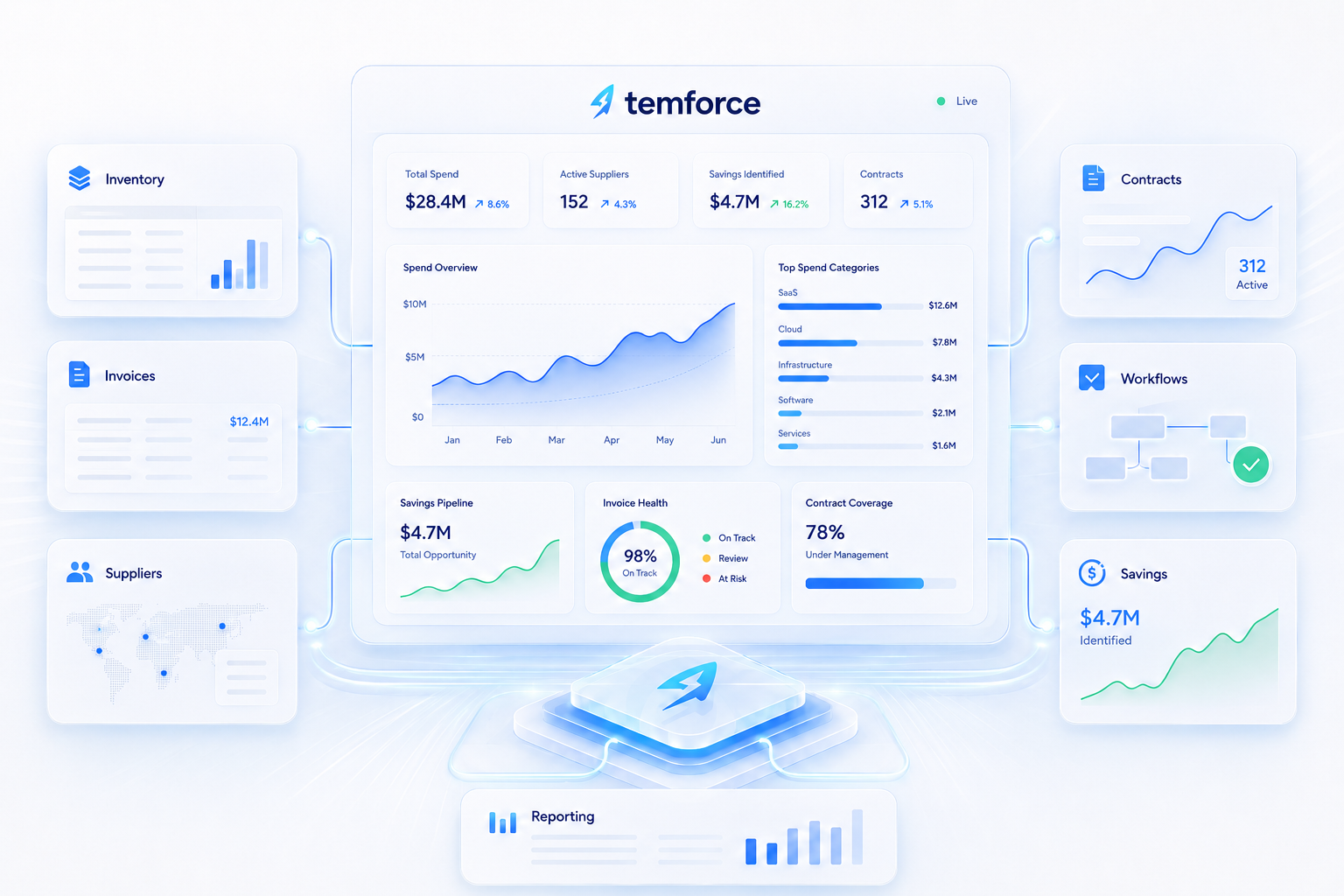
Structure inventory, billing accounts, suppliers, contracts, owners, locations, cost centers, and lifecycle status into usable records.
Connect tasks, approvals, supplier follow-up, MCAD orders, renewals, disconnects, credits, recoveries, and reporting.
Build savings tracking, dashboards, reporting, AI-supported insight, API connectivity, and support routines into the roadmap.
A practical TEM software implementation roadmap has six connected phases.
The strongest implementation plans connect platform setup to operating outcomes: inventory truth, invoice validation, supplier accountability, lifecycle workflows, AI, APIs, support, savings, and reporting.
Kickoff
Data
Invoice + Supplier
Workflow
AI + APIs
Go-Live
Implementation is not perfectly linear. Inventory, invoice validation, workflow, reporting, support, AI, and APIs should be planned together so go-live launches a working TEMOps model, not just a configured system.
Kickoff and operating alignment.
The roadmap starts by aligning stakeholders around scope, outcomes, data sources, workflow priorities, supplier complexity, invoice goals, reporting needs, support expectations, and go-live success measures.
Inventory and data migration.
Data migration should create a trusted operating foundation. Inventory records, billing accounts, suppliers, owners, locations, cost centers, contract references, service identifiers, and lifecycle status should be mapped, cleaned, and structured for use.
Invoice, supplier, and contract setup.
The platform should be configured so invoices can be reviewed against operating reality. Suppliers, billing accounts, contracts, disputes, credits, recoveries, expected charges, and reporting categories should connect to the right records.
Workflow configuration and customization.
Implementation should configure workflows around the work the team actually performs. Requests, MCAD order management, renewals, disconnects, disputes, supplier follow-up, approvals, tasks, meetings, documents, and lifecycle steps should have clear ownership and status.
AI, APIs, support, and reporting readiness.
Before go-live, the roadmap should confirm how users will get answers, how data will connect, how support will operate, and how reporting will prove outcomes. Boostforce AI, ready-built APIs, dashboards, reporting, and support routines should be connected to real use cases.
Go-live, adoption, and continuous improvement.
Go-live should launch the operating model, not just the software. Users should know what work moves through the platform, how savings are tracked, how suppliers are managed, how reporting is reviewed, and how support helps the team improve after launch.
Organize implementation around the workstreams that matter.
A TEM software roadmap becomes easier to manage when each workstream has a clear owner, input, output, and go-live expectation.
Move services, assets, billing accounts, suppliers, owners, locations, cost centers, contracts, and lifecycle status into a usable operating record.
Connect invoices to billing accounts, suppliers, inventory records, contracts, expected charges, exceptions, disputes, credits, and recoveries.
Configure suppliers, contacts, escalation paths, contracts, disputes, correction requests, follow-up actions, and supplier reporting.
Link contracts to suppliers, inventory, invoice validation, renewals, amendments, obligations, pricing context, and reporting.
Configure requests, approvals, moves, changes, adds, disconnects, renewals, retirements, MCAD orders, and billing validation.
Prepare Boostforce AI use cases, ready-built API needs, finance handoffs, connected data flows, reporting integration, and ecosystem alignment.
Define user roles, training needs, permissions, support routines, configuration needs, reporting reviews, and improvement cadence.
Launch dashboards for inventory quality, invoice exceptions, supplier activity, workflow status, credits, recoveries, savings, and leadership visibility.
Use the roadmap to connect phase, output, and ownership.
Each phase should produce something useful for go-live, adoption, and ongoing TEMOps execution.
| Phase | Primary output | What Temforce helps support |
|---|---|---|
| Kickoff | Scope, stakeholders, success measures, implementation priorities, reporting goals, and operating model alignment. | Temforce helps align implementation around inventory truth, invoice validation, supplier control, workflows, savings, and reporting. |
| Data migration | Structured inventory records, billing accounts, suppliers, contracts, owners, locations, cost centers, and lifecycle status. | Temforce helps turn disconnected source data into usable operating records for TEMOps execution. |
| Invoice setup | Invoice records, billing account mapping, supplier context, expected charges, exception categories, disputes, credits, and recoveries. | Temforce connects invoice validation to inventory truth, supplier accountability, savings tracking, and reporting evidence. |
| Workflow configuration | Requests, approvals, MCAD orders, lifecycle workflows, supplier follow-up, tasks, meetings, documents, and status tracking. | Temforce supports configurable workflows, TRACforce tasks, TRACsheets, TRACMeets, documents, ownership, and reporting. |
| AI, APIs, and reporting | AI use cases, API needs, reporting views, dashboard priorities, finance handoffs, and connected data flows. | Temforce supports Boostforce AI, ready-built APIs, dashboards, reporting, customization, support, and customer ecosystem alignment. |
| Go-live | User access, workflow launch, reporting cadence, savings tracking, invoice review, supplier follow-up, and support routines. | Temforce helps customers launch with dedicated support, adoption guidance, reporting structure, and continuous improvement. |
The best implementation roadmap turns setup into operating confidence.
Temforce helps teams implement TEM software around the work that matters: inventory truth, invoice validation, supplier accountability, contract visibility, lifecycle workflows, Boostforce AI, ready-built APIs, application customization, dedicated support, savings tracking, dashboards, and reporting.
TEM Software Implementation Roadmap FAQ.
Use these answers to understand how to plan a TEM software implementation around inventory migration, invoice setup, suppliers, workflows, AI, APIs, customization, support, savings, and reporting.
What is a TEM software implementation roadmap?
A TEM software implementation roadmap is a phased plan for launching Technology Expense Management software. It typically includes kickoff, data migration, inventory setup, invoice setup, supplier and contract configuration, workflow design, AI and API readiness, reporting, user adoption, support, and go-live.
What should be prepared before implementing TEM software?
Teams should prepare inventory files, invoice data, billing account lists, supplier records, contract references, owner and cost center data, lifecycle status, workflow requirements, reporting goals, user roles, support needs, and integration or API requirements.
Why is inventory migration important during TEM implementation?
Inventory migration is important because inventory truth supports invoice validation, supplier accountability, contract visibility, lifecycle workflows, AI-supported answers, API-connected data, savings tracking, dashboards, and reporting.
How should invoice setup be handled during implementation?
Invoice setup should connect carrier and vendor invoices to billing accounts, inventory records, suppliers, contracts, expected charges, exception categories, disputes, credits, recoveries, finance needs, and reporting views.
How do AI and APIs fit into TEM implementation?
Boostforce AI and ready-built APIs should be planned around practical use cases. AI should help users ask better questions, summarize activity, surface answers, and explain cost context. APIs should support connected data flows, integrations, finance handoffs, reporting, and customer ecosystem alignment.
How does Temforce support TEM software implementation?
Temforce supports TEM software implementation by connecting inventory truth, invoice validation, supplier control, contracts, lifecycle workflows, Boostforce AI, ready-built APIs, application customization, dedicated support, savings tracking, dashboards, and reporting into one TEMOps platform.
Move from implementation planning to TEMOps execution.
Temforce helps teams implement TEM software with inventory truth, invoice validation, supplier accountability, contract visibility, lifecycle workflows, Boostforce AI, ready-built APIs, application customization, dedicated support, savings tracking, dashboards, and reporting.
