
Telecom invoice validation works best when billing is checked against inventory truth.
The Telecom Invoice Validation Framework helps teams connect carrier invoices to telecom inventory, billing accounts, circuits, mobile lines, suppliers, contracts, disputes, credits, recoveries, lifecycle changes, Boostforce AI, ready-built APIs, dedicated support, savings tracking, and reporting.
Telecom invoices are not just bills to review. They are recurring signals that should be validated against services, suppliers, contracts, lifecycle activity, and savings evidence.
Telecom spend is difficult to control when invoices are reviewed without connected inventory, billing account history, carrier context, contract visibility, dispute tracking, disconnect status, and reporting evidence. The framework creates a stronger validation model by connecting the invoice to the operating reality behind each charge.
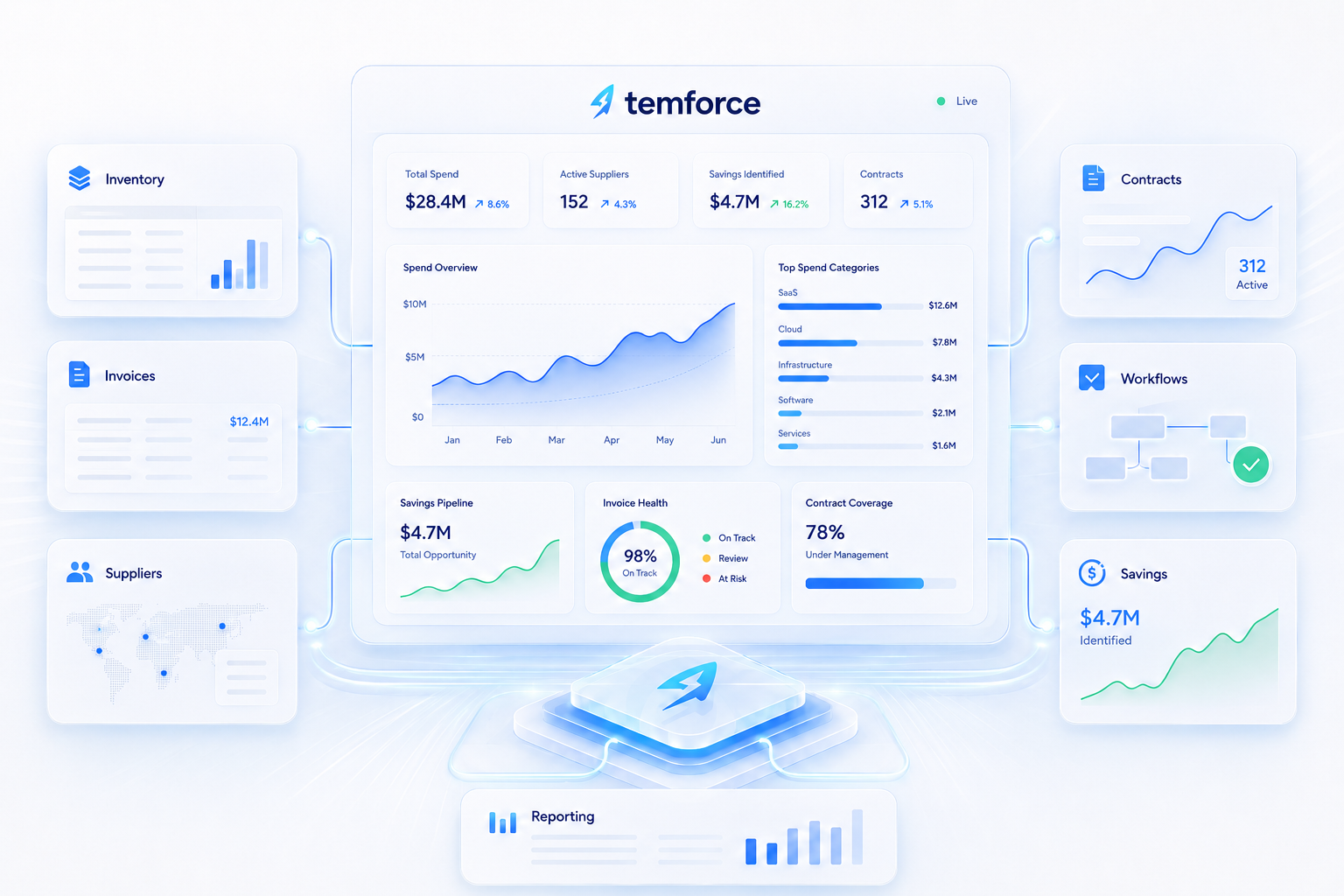
Each invoice charge should be checked against telecom inventory, billing accounts, service records, supplier records, contract context, expected costs, and lifecycle status.
Billing exceptions should become disputes, supplier follow-up, credits, recoveries, approval review, lifecycle action, or reporting updates.
Credits, recoveries, disconnect savings, billing corrections, supplier outcomes, and invoice changes should connect back to savings proof and reports.
The telecom invoice validation framework has six control layers.
The framework connects invoices to the records and workflows needed to control recurring telecom spend: inventory, billing accounts, supplier accountability, contract visibility, lifecycle activity, disputes, credits, recoveries, AI, APIs, support, and reporting.
Invoice intake and normalization.
Telecom invoice validation starts by organizing carrier invoice data so it can be understood, reviewed, and compared consistently. Invoices, billing accounts, charges, taxes, fees, service identifiers, locations, suppliers, and recurring items need to be visible enough to support validation.
Inventory and billing account matching.
Every invoice charge should connect back to the telecom inventory record or billing account that explains why the charge exists. Matching charges to circuits, mobile lines, network services, suppliers, accounts, locations, owners, cost centers, and lifecycle status helps teams validate whether the bill reflects reality.
Contract, rate, and expectation review.
Validation becomes stronger when invoice charges are compared to contract context, expected charges, recurring service history, supplier commitments, pricing assumptions, and known changes. This helps teams see whether a charge is expected, questionable, incorrect, missing, duplicated, or ready for dispute.
Exception handling and dispute workflow.
Invoice validation has real value when exceptions move into workflow. Incorrect charges, duplicate charges, missing credits, active billing after disconnect, supplier errors, contract mismatches, unusual fees, or unsupported charges should become tracked work with ownership, status, supplier follow-up, evidence, and outcome reporting.
Lifecycle validation and billing impact.
Moves, changes, adds, disconnects, renewals, and retirements should be validated against invoice activity. If a service was disconnected, the invoice should show that billing stopped. If a change was completed, the invoice should reflect the correct charge. If a renewal changed pricing, billing should align with the expected outcome.
Reporting, intelligence, and continuous improvement.
The framework should make each billing cycle smarter. Boostforce AI, ready-built APIs, application customization, dedicated support, dashboards, and reporting help teams surface patterns, connect data flows, improve workflows, summarize activity, prove savings, and report outcomes.
Use validation checks to find billing leakage.
A practical telecom invoice validation framework checks for the billing patterns that often create waste, disputes, credits, recoveries, and savings opportunities.
A billed charge without a trusted telecom inventory record may indicate missing data, supplier error, duplicate billing, inactive service, or ownership review.
Services marked disconnected, retired, or pending cancellation should be checked against invoices to confirm billing stopped and savings are captured.
Duplicate service identifiers, recurring charges, overlapping accounts, or duplicate location charges can indicate billing errors or cleanup opportunities.
Charges should be reviewed against expected rates, contract terms, supplier commitments, amendments, renewals, and known pricing changes.
Expected credits and recoveries should be tracked until they appear on invoices and are connected to savings reporting.
Supplier promises, correction requests, escalations, dispute responses, and carrier actions should be validated against billing outcomes.
Moves, changes, adds, renewals, and disconnects should be checked to confirm the invoice reflects the completed lifecycle action.
Identified issues should connect to dispute status, supplier outcome, credit, recovery, correction, savings estimate, and final savings evidence.
Telecom invoice validation should connect review, action, and proof.
The framework turns invoice validation into repeatable TEMOps execution by connecting each finding to the records, people, suppliers, workflows, and evidence needed to resolve it.
| Validation Layer | What it answers | How Temforce supports the framework |
|---|---|---|
| Invoice to inventory | Does this charge belong to a known circuit, mobile line, service, billing account, location, owner, and supplier? | Temforce connects telecom invoices to inventory truth, billing accounts, service records, locations, owners, suppliers, lifecycle status, and reporting. |
| Invoice to contract | Does the billed charge align with expected terms, pricing context, commitments, renewals, amendments, and supplier obligations? | Temforce connects contracts and supplier context to invoice validation, disputes, credits, recoveries, renewal control, and reporting evidence. |
| Exception to workflow | Who owns the issue, what evidence is needed, which supplier action is required, and what status should be reported? | Temforce connects exceptions to tasks, supplier follow-up, documents, meetings, dispute status, due dates, savings, and reports. |
| Supplier to correction | Did the carrier or supplier correct the billing issue, apply the credit, resolve the dispute, or confirm the change? | Temforce tracks supplier accountability, correction requests, escalation paths, responses, credits, recoveries, and outcome reporting. |
| Lifecycle to billing | Did a move, change, add, disconnect, renewal, or retirement appear correctly on the invoice? | Temforce connects MCAD order management, lifecycle workflows, supplier actions, inventory updates, billing impact, and savings proof. |
| Finding to savings | What value was identified, corrected, credited, recovered, avoided, disconnected, or reported? | Temforce connects billing corrections, credits, recoveries, disconnect savings, supplier outcomes, workflow status, and reporting evidence. |
| Data to intelligence | What patterns, recurring issues, supplier trends, inventory gaps, or reporting needs should be surfaced? | Temforce supports Boostforce AI, ready-built APIs, application customization, dedicated support, dashboards, reports, and continuous improvement. |
Invoice validation becomes stronger when telecom billing is connected to operating truth.
Temforce helps teams connect carrier invoices to telecom inventory, billing accounts, suppliers, contracts, lifecycle workflows, dispute management, credits, recoveries, Boostforce AI, ready-built APIs, application customization, dedicated support, savings tracking, dashboards, and reporting.
Telecom Invoice Validation Framework FAQ.
Use these answers to understand how telecom invoice validation connects carrier invoices to inventory truth, billing accounts, suppliers, contracts, disputes, credits, recoveries, AI, APIs, support, savings, and reporting.
What is telecom invoice validation?
Telecom invoice validation is the process of checking carrier invoices against telecom inventory, billing accounts, supplier records, contract context, expected charges, lifecycle activity, disputes, credits, recoveries, and finance requirements to confirm charges are accurate and supported.
Why does telecom invoice validation need inventory truth?
Telecom invoice validation needs inventory truth because teams must know which circuits, mobile lines, services, billing accounts, suppliers, owners, locations, contracts, and lifecycle statuses exist before they can determine whether billed charges are correct.
What should be checked during telecom invoice validation?
Teams should check invoice charges against telecom inventory, billing accounts, expected charges, contract terms, supplier records, duplicate charges, missing credits, disconnect status, lifecycle changes, disputes, recoveries, approvals, and reporting needs.
How does telecom invoice validation support savings?
Telecom invoice validation supports savings by identifying incorrect charges, duplicate charges, missing credits, billing after disconnect, supplier errors, contract mismatches, recoveries, credits, and lifecycle savings opportunities.
How should invoice exceptions be managed?
Invoice exceptions should move into tracked workflow with an owner, evidence, supplier follow-up, dispute status, expected correction, due date, credit or recovery tracking, resolution status, and reporting evidence.
How do AI and APIs support telecom invoice validation?
Boostforce AI helps users ask better questions, summarize invoice activity, surface patterns, explain cost context, and identify recurring issues. Ready-built APIs support connected data flows, integrations, finance handoffs, reporting, and customer ecosystem alignment.
How does Temforce support the Telecom Invoice Validation Framework?
Temforce supports the Telecom Invoice Validation Framework by connecting carrier invoices to telecom inventory, billing accounts, suppliers, contracts, disputes, credits, recoveries, lifecycle workflows, Boostforce AI, ready-built APIs, application customization, dedicated support, savings tracking, dashboards, and reporting.
Turn telecom invoice validation into repeatable TEMOps control.
Temforce helps teams connect telecom invoices to inventory truth, billing accounts, supplier accountability, contract visibility, lifecycle workflows, disputes, credits, recoveries, Boostforce AI, ready-built APIs, application customization, dedicated support, savings tracking, dashboards, and reporting.
