
Connect ServiceNow workflows to TEMOps execution.
Temforce supports ServiceNow TEM integration planning by helping teams connect the technology expense records behind the work: inventory, invoices, suppliers, contracts, billing accounts, disputes, savings, Boostforce AI, ready-built APIs, dedicated support, and reporting.
ServiceNow can coordinate work. Temforce helps connect the TEM data behind it.
When teams plan a ServiceNow TEM integration, the goal is not just to move tickets between systems. The goal is to make sure requests, approvals, incidents, inventory records, invoices, suppliers, contracts, savings actions, and reporting stay connected to the right operating truth.
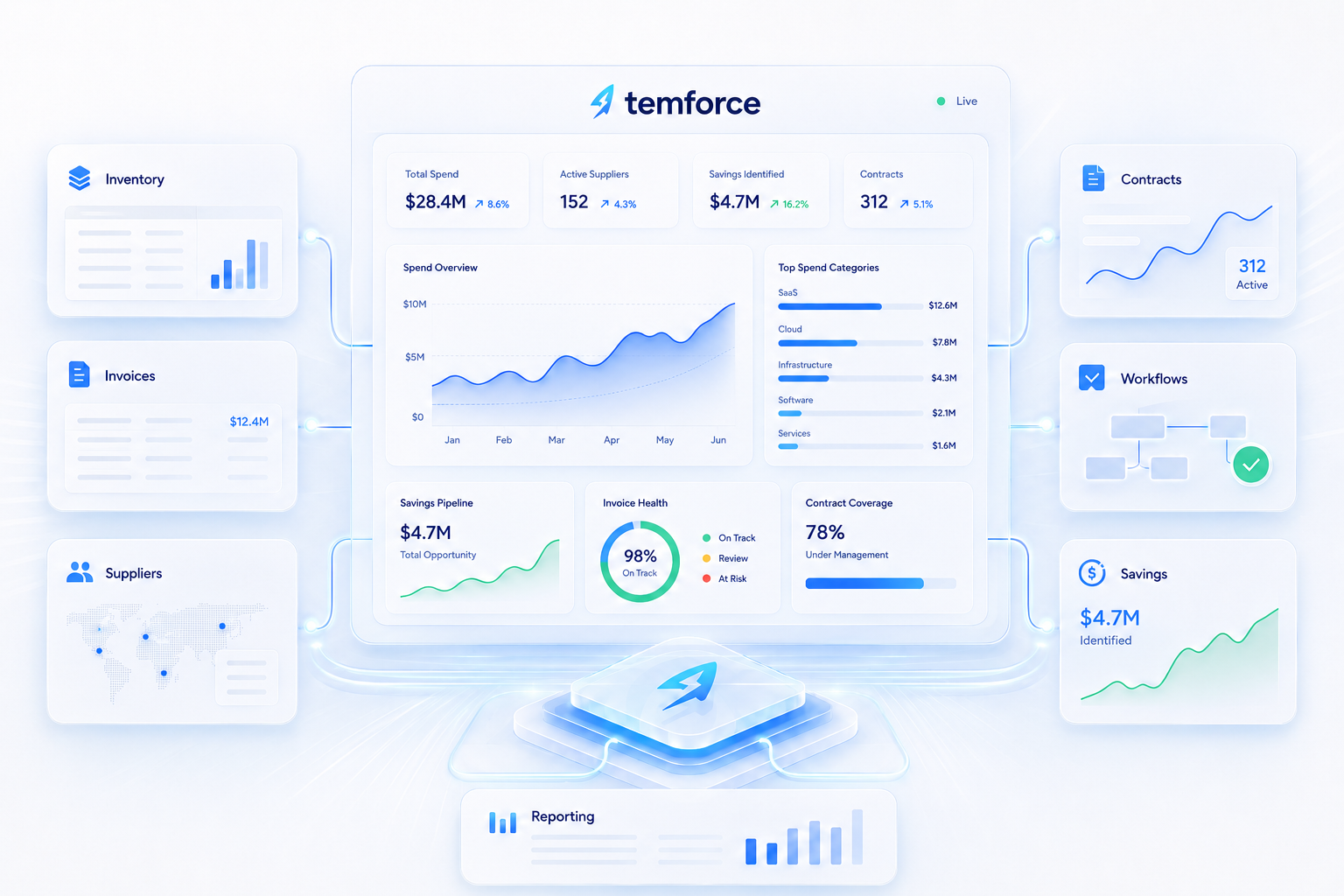
Temforce helps teams connect services, billing accounts, suppliers, owners, locations, contracts, invoices, cost centers, and lifecycle status.
Support workflows for approvals, disputes, supplier follow-up, disconnects, renewals, MCAD activity, tasks, and savings actions.
Connect activity to credits, recoveries, billing corrections, savings proof, supplier outcomes, support activity, and reporting.
What is ServiceNow TEM integration?
ServiceNow TEM integration is the planning and connection of enterprise workflow activity with the Technology Expense Management data needed to manage telecom inventory, invoices, suppliers, contracts, requests, disputes, savings, and reporting.
Link service requests and operational activity to the TEM records that explain the service, supplier, billing account, owner, location, and cost context.
Use inventory, supplier, contract, approval, dispute, and cost center context to support better telecom invoice validation and reporting.
Turn invoice issues, inventory gaps, supplier follow-up, disconnect activity, renewal work, and savings opportunities into accountable next steps.
Where ServiceNow and Temforce can work together.
A strong integration plan starts by identifying which workflows need ServiceNow visibility and which TEM records need Temforce context.
Incidents, tasks, service requests, approvals, and operational workflow triggers.
Inventory, invoices, suppliers, contracts, billing accounts, savings, and reporting context.
Connect request activity to telecom services, technology inventory, suppliers, billing accounts, owners, approvals, lifecycle status, and downstream actions.
Use Temforce as the TEM operating layer for services, circuits, mobile lines, billing accounts, suppliers, owners, locations, contracts, and lifecycle status.
Connect invoice review to inventory, billing accounts, suppliers, contracts, approvals, disputes, credits, recoveries, and reporting needs.
Track supplier contacts, issue history, escalation paths, dispute status, credits, resolution notes, and follow-up activity.
Connect savings opportunities to inventory cleanup, disconnects, invoice findings, billing corrections, supplier actions, and reporting evidence.
Support dashboards and reports that connect work status, invoice control, inventory quality, supplier follow-up, savings, and executive visibility.
Questions to answer before a ServiceNow TEM integration.
The best integration plan starts with the work your team needs to control, the systems that own each record, and the outcomes you want to measure.
| Integration Area | Questions to ask | How Temforce supports the work |
|---|---|---|
| Inventory records | Which services, billing accounts, suppliers, owners, locations, cost centers, and lifecycle fields need to connect to workflow activity? | Temforce centers inventory as the operating record behind invoice validation, supplier control, lifecycle activity, reporting, AI, APIs, and savings. |
| Request routing | Which requests should start in ServiceNow, which should start in Temforce, and where should status updates be visible? | Temforce helps teams structure requests, MCAD activity, approvals, assignments, supplier follow-up, disconnects, and accountable next steps. |
| Invoice exceptions | How should invoice exceptions, disputes, approvals, credits, and recoveries connect to tasks, suppliers, and reporting? | Temforce connects invoice validation to inventory, suppliers, contracts, approvals, finance validation, disputes, credits, and reporting context. |
| Supplier control | Where should supplier contacts, escalation paths, issue history, dispute status, and resolution notes live? | Temforce helps connect supplier relationships, account context, dispute status, credits, contracts, and follow-up activity. |
| API and data flows | Which data needs to move between systems, how often, and for what business purpose? | Temforce includes ready-built API capabilities to support connected data flows, integrations, reporting needs, and customer ecosystem alignment. |
| Reporting and savings | How will leadership see savings, credits, recoveries, billing corrections, disconnects, and workflow progress? | Temforce helps connect savings actions to supporting data, workflow status, recoveries, disconnects, supplier corrections, and reporting evidence. |
ServiceNow TEM integration planning should include AI, APIs, customization, and support.
Integration planning is stronger when the team thinks beyond field mapping and includes AI readiness, API use cases, application configuration, reporting needs, and ongoing support.
Use trusted operating data to help users summarize activity, surface answers, identify patterns, and move from insight to action.
Plan integration use cases around the data that needs to move between systems, reports, workflows, and operating teams.
Configure workflows, terminology, reporting priorities, data structures, visibility, permissions, and TEMOps execution needs.
Use support for adoption, configuration, issue resolution, reporting assistance, workflow improvement, and long-term operating value.
AI-ready integration starts with trusted TEM data.
ServiceNow TEM integration planning becomes more valuable when requests, tasks, invoices, inventory, suppliers, contracts, savings, APIs, support activity, and reporting are connected to the same operating truth.
ServiceNow TEM Integration FAQ.
Use these answers to understand how ServiceNow TEM integration planning can connect workflow activity to TEM data, invoices, suppliers, inventory, savings, AI, APIs, support, and reporting.
What is ServiceNow TEM integration?
ServiceNow TEM integration is the planning and connection of ServiceNow workflow activity with Technology Expense Management records such as inventory, billing accounts, invoices, suppliers, contracts, requests, disputes, savings, and reporting.
Does Temforce replace ServiceNow?
Not necessarily. Temforce can serve as the dedicated TEM operating layer while ServiceNow continues to support enterprise workflow activity. The right structure depends on the customer environment, systems, data, and process design.
What data should be considered for ServiceNow TEM integration?
Teams should consider inventory records, billing accounts, supplier data, invoice status, contract context, requests, approvals, disputes, savings actions, workflow status, reporting needs, and API use cases.
Why are APIs important for ServiceNow TEM integration?
APIs matter because integration planning often requires connected data flows between systems, reports, workflows, finance processes, service records, and operational teams.
How does AI fit into ServiceNow TEM integration planning?
AI is most useful when the underlying TEM data is connected and trusted. Boostforce AI can help users ask better questions, summarize activity, surface patterns, explain data, and move from insight to action.
How does Temforce support ServiceNow TEM integration planning?
Temforce supports integration planning by helping teams connect inventory truth, invoice validation, supplier control, contracts, workflow governance, savings tracking, Boostforce AI, ready-built APIs, application customization, dedicated support, and reporting.
Plan ServiceNow TEM integration around operating truth.
Temforce helps teams connect inventory truth, invoice validation, supplier accountability, workflow control, Boostforce AI, ready-built APIs, application customization, dedicated support, savings tracking, and reporting into one practical Technology Expense Management platform.
