
A TEMOps operating model turns technology expense work into repeatable execution.
TEMOps is the operating discipline behind better Technology Expense Management. It connects inventory truth, invoice validation, supplier accountability, contract visibility, requests, MCAD order management, lifecycle workflows, Boostforce AI, ready-built APIs, application customization, dedicated support, savings tracking, reporting, and governance into one structured model.
TEMOps gives technology expense work a system. Not just a place to store data, but a model for how work moves, who owns it, and how outcomes are proven.
Technology Expense Management becomes difficult when inventory, invoices, suppliers, contracts, requests, renewals, disconnects, disputes, credits, recoveries, meetings, documents, savings, and reports live in different places. TEMOps creates the structure for connecting those activities into one operating rhythm.
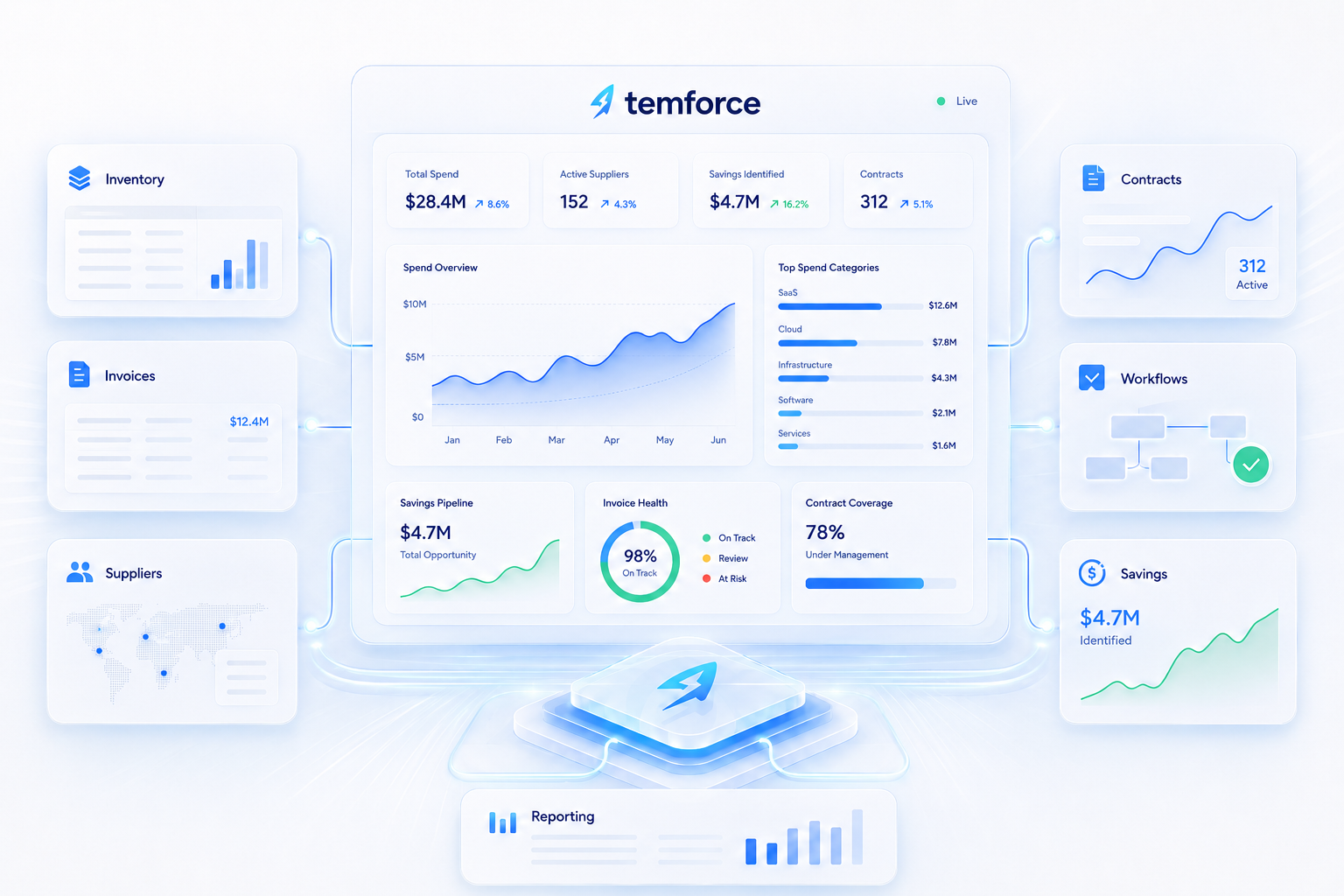
Inventory truth connects services, assets, billing accounts, suppliers, owners, locations, contracts, cost centers, and lifecycle status.
Requests, MCAD orders, invoice exceptions, disputes, supplier follow-up, renewals, disconnects, tasks, meetings, and documents need clear status and ownership.
Savings, credits, recoveries, corrections, lifecycle updates, supplier outcomes, and inventory cleanup should be visible in reporting leadership can trust.
The TEMOps operating model is built on six connected pillars.
The model works when each pillar strengthens the others. Inventory supports invoices. Invoices trigger workflow. Workflow drives supplier accountability. Supplier and contract activity informs lifecycle decisions. AI, APIs, customization, support, and reporting keep the operating model active.
Inventory truth.
Inventory truth is the foundation of TEMOps because every invoice, supplier issue, contract question, lifecycle change, savings opportunity, AI answer, API connection, and report depends on knowing what exists and why it exists.
Invoice validation.
Invoice validation turns recurring billing into controlled operating work. The TEMOps model compares billed charges to inventory, billing accounts, contracts, supplier records, approvals, expected charges, disputes, credits, recoveries, and finance context.
Supplier and contract accountability.
Supplier accountability and contract visibility keep TEMOps connected to the parties and obligations that shape spend. The model should show who owns supplier follow-up, what issue is open, which contract applies, what response is needed, and how outcomes are documented.
Lifecycle and MCAD execution.
The TEMOps model turns lifecycle work into controlled execution. Requests, moves, changes, adds, disconnects, renewals, retirements, supplier actions, inventory updates, billing changes, and savings proof should move through structured workflow.
Workflow rhythm and governance.
TEMOps needs a working rhythm. Tasks, meetings, documents, approvals, issue ownership, due dates, reporting cadence, decision records, and governance routines help make the operating model repeatable instead of reactive.
Intelligence, connectivity, support, and reporting.
The operating model stays useful when it adapts. Boostforce AI, ready-built APIs, application customization, dedicated support, dashboards, and reporting help teams ask better questions, connect data flows, tailor the platform, improve adoption, and show outcomes.
A practical TEMOps model creates a repeatable rhythm.
The operating model should clarify what happens daily, weekly, monthly, quarterly, and during major technology expense events.
| Operating Rhythm | What the team should manage | How Temforce supports the rhythm |
|---|---|---|
| Daily execution | Open tasks, supplier follow-up, request intake, invoice exceptions, approvals, documents, notes, and ownership updates. | TRACforce tasks, TRACsheets, TRACMeets, workflow status, documents, assignments, due dates, and dashboards help keep work moving. |
| Weekly review | Inventory changes, invoice exceptions, supplier issues, open disputes, lifecycle requests, renewals, disconnects, and savings progress. | Temforce connects inventory, invoices, suppliers, contracts, lifecycle activity, meetings, tasks, savings, and reporting into one review motion. |
| Monthly controls | Invoice validation results, billing changes, credits, recoveries, supplier outcomes, finance support, savings proof, and reporting updates. | Invoice management, supplier control, dispute status, billing account context, savings tracking, dashboards, and reports support monthly control. |
| Quarterly governance | Supplier performance, contract status, renewal planning, inventory quality, lifecycle trends, spend changes, savings realization, and operating improvements. | Reporting views, dashboards, supplier records, contract context, inventory quality, workflow data, and savings evidence support governance reviews. |
| Event-driven work | Migrations, acquisitions, location changes, supplier transitions, major renewals, audits, disconnect projects, and large invoice events. | Temforce supports project-style TEMOps work through inventory truth, workflow ownership, supplier accountability, API connectivity, AI assistance, and reporting. |
TEMOps works when every role understands what they own.
The operating model connects technology, finance, procurement, telecom, operations, suppliers, support, and leadership around the same source of truth and the same execution rhythm.
Technology teams need clear visibility into active services, requests, changes, disconnects, supplier actions, and operational impact.
Finance needs validated charges, billing context, approval support, exceptions, credits, recoveries, savings proof, and reliable reporting.
Procurement needs visibility into supplier performance, contract terms, renewals, obligations, escalations, pricing context, and outcomes.
Telecom teams need connected inventory, circuits, mobile lines, billing accounts, carrier disputes, disconnects, renewals, and service changes.
Operations teams need tasks, meetings, documents, owners, due dates, workflow status, handoffs, escalation visibility, and reporting cadence.
Suppliers and carriers need clear requests, correction details, dispute evidence, status expectations, escalation paths, and confirmation steps.
Dedicated support helps customers configure workflows, refine reports, solve issues, improve adoption, connect data, and sustain value.
Leadership needs dashboards and reporting that explain spend, risk, savings, supplier activity, workflow progress, and operating maturity.
The TEMOps operating model turns TEM from reactive cleanup into managed execution.
Temforce helps teams create the structure behind better technology expense outcomes by connecting records, workflows, suppliers, contracts, invoices, lifecycle activity, AI, APIs, customization, support, savings, and reporting.
TEMOps Operating Model FAQ.
Use these answers to understand how a TEMOps operating model connects inventory truth, invoice validation, supplier control, lifecycle workflows, AI, APIs, customization, support, savings, reporting, and governance.
What is a TEMOps operating model?
A TEMOps operating model is a structured way to run Technology Expense Management. It defines how inventory truth, invoice validation, supplier accountability, contracts, lifecycle workflows, tasks, meetings, documents, AI, APIs, support, savings, reporting, and governance work together.
Why does TEMOps start with inventory truth?
TEMOps starts with inventory truth because teams need a trusted record of services, assets, billing accounts, suppliers, owners, locations, cost centers, contracts, and lifecycle status before they can validate invoices, manage suppliers, control changes, identify savings, use AI, connect APIs, and report outcomes.
How does invoice validation fit into the TEMOps model?
Invoice validation fits into TEMOps by comparing billed charges to inventory, billing accounts, contracts, supplier records, approvals, expected activity, disputes, credits, recoveries, and finance context. Exceptions should move into tracked workflow and supplier follow-up.
What roles are involved in TEMOps?
TEMOps often involves technology, finance, procurement, telecom, operations, suppliers, support, and leadership. Each role needs clear visibility into records, responsibilities, workflows, decisions, savings, and reporting outcomes.
How do AI and APIs support a TEMOps operating model?
Boostforce AI helps users ask better questions, summarize activity, surface answers, explain cost context, and identify patterns. Ready-built APIs support connected data flows, integrations, finance handoffs, reporting needs, and customer ecosystem alignment.
Why are customization and support important to TEMOps?
Customization and support help the operating model fit the customer. Configurable workflows, fields, terminology, permissions, reports, and dedicated support improve adoption, issue resolution, reporting, workflow maturity, and long-term value.
How does Temforce support the TEMOps operating model?
Temforce supports the TEMOps operating model by connecting inventory truth, invoice validation, supplier control, contracts, requests, MCAD order management, tasks, meetings, documents, Boostforce AI, ready-built APIs, application customization, dedicated support, savings tracking, dashboards, and reporting.
Turn Technology Expense Management into TEMOps execution.
Temforce helps teams build a practical TEMOps operating model around inventory truth, invoice validation, supplier accountability, contract visibility, lifecycle workflows, Boostforce AI, ready-built APIs, application customization, dedicated support, savings tracking, reporting, and governance.
