
Telecom Expense Management best practices start with telecom inventory truth.
Telecom Expense Management best practices are not limited to paying carrier invoices or chasing credits. Strong telecom programs connect inventory truth, invoice validation, carrier accountability, contracts, disputes, workflows, savings proof, Boostforce AI, ready-built APIs, dedicated support, and reporting into one operating model.
Telecom Expense Management is an operating discipline. Best practices only matter when they become repeatable carrier, invoice, inventory, and savings execution.
Best practice telecom expense management is not a one-time audit. It is a repeatable operating rhythm for understanding what services exist, what carriers bill, what should be disputed, what credits are owed, what should be disconnected, and what leadership needs to see.
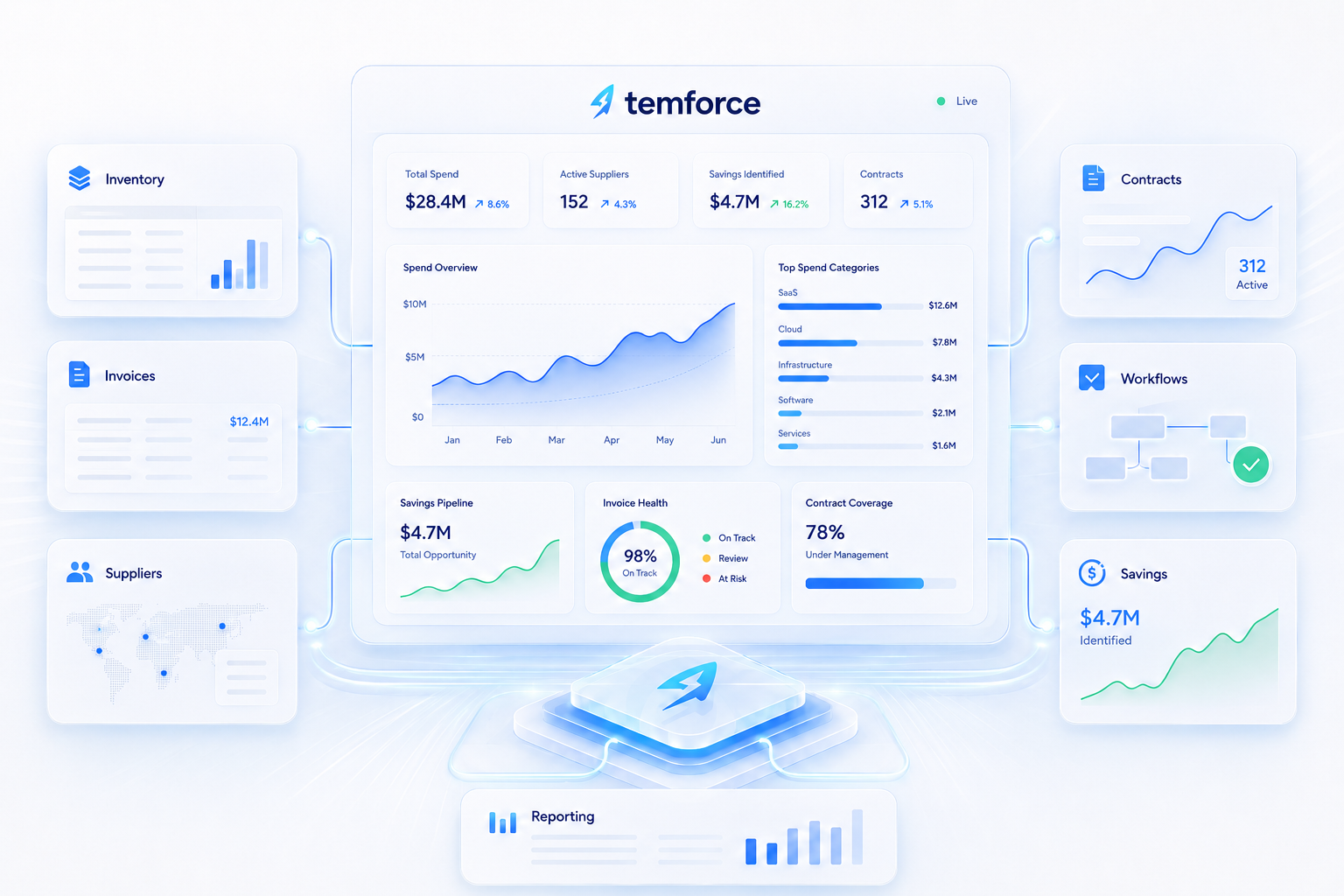
Circuits, mobile lines, services, billing accounts, suppliers, owners, locations, cost centers, contracts, and lifecycle status should support every invoice decision.
Invoice exceptions, billing disputes, credits, carrier escalations, disconnects, renewals, and savings tasks should be tracked in accountable workflows.
Savings, credits, recoveries, billing corrections, carrier actions, inventory cleanup, and disconnect outcomes should be documented before they are reported.
Build telecom expense management around repeatable control.
The strongest telecom expense management programs connect the carrier data, workflows, inventory, invoices, contracts, disputes, savings, AI, APIs, support, and reporting required to keep telecom expense work moving.
Maintain accurate records for circuits, mobile lines, services, billing accounts, carriers, owners, locations, cost centers, contracts, and lifecycle status.
Compare recurring carrier charges to inventory, contracts, billing accounts, approvals, expected services, disputes, credits, and finance context.
Track carrier contacts, account context, issue history, escalation paths, billing corrections, credits, recoveries, and follow-up status.
Link carrier invoices to contract terms, commitments, obligations, amendments, renewals, service coverage, and supplier accountability.
Use governed workflows for invoice exceptions, carrier escalations, credits, billing corrections, recovery status, and evidence.
Document credits, recoveries, corrections, disconnects, inventory cleanup, carrier outcomes, optimization activity, and reporting evidence.
Help users summarize carrier activity, surface answers, identify billing patterns, explain cost context, and move from insight to action.
Support connected data flows, integrations, reporting needs, finance handoffs, operational processes, and customer ecosystem alignment.
Configure workflows, terminology, reporting priorities, carrier data structures, permissions, visibility, and operating views around TEMOps priorities.
Help users improve adoption, solve issues, refine workflows, configure the platform, improve reporting, and maintain long-term operating value.
Show telecom spend, inventory quality, invoice exceptions, carrier activity, workflow status, dispute progress, savings, credits, and recoveries.
Connect the platform, workflows, support, data, carriers, invoices, contracts, disputes, savings, AI, APIs, and reporting into a practical TEMOps model.
Telecom Expense Management best practices should be specific enough to execute.
Use this table to connect each best practice to the operating action and business value behind it.
| Best Practice | What to do | Why it matters |
|---|---|---|
| Telecom inventory truth | Maintain accurate records for circuits, mobile lines, services, billing accounts, owners, locations, suppliers, contracts, and lifecycle status. | Reliable telecom inventory makes invoice validation, carrier disputes, savings work, AI, APIs, and reporting more trustworthy. |
| Invoice validation | Validate recurring carrier charges against inventory, contracts, expected services, billing accounts, approvals, disputes, credits, and finance context. | Invoice validation helps reduce avoidable spend, identify billing errors, improve payment control, and document recovery opportunities. |
| Carrier management | Track carrier contacts, accounts, issues, escalation paths, corrections, credits, recoveries, and resolution status. | Carrier control helps prevent open issues from becoming recurring cost, reporting gaps, or missed recovery opportunities. |
| Contract visibility | Connect contract terms, renewals, amendments, commitments, obligations, and supplier terms to invoice and inventory activity. | Contract visibility helps teams compare carrier billing to commercial expectations and prepare for renewals before they become urgent. |
| Dispute governance | Assign owners, due dates, status, tasks, escalation paths, documentation, credits, recoveries, and resolution evidence. | Dispute governance makes carrier recovery work accountable instead of dependent on emails, spreadsheets, and individual memory. |
| Data quality | Use consistent fields, supplier names, account structures, service categories, location data, cost centers, and lifecycle states. | Clean data improves reporting, savings proof, finance alignment, AI readiness, API connectivity, and operational trust. |
| AI readiness | Use structured inventory, invoice, carrier, contract, workflow, dispute, and savings data so AI can surface better answers. | AI becomes more useful when telecom data is organized, current, and connected to the operating model. |
| API connectivity | Plan how telecom expense data should connect to finance, procurement, service management, reporting, or other customer systems. | APIs help reduce duplicate work, improve data flow, and connect telecom expense execution to the broader business ecosystem. |
| Reporting | Report spend, invoice exceptions, disputes, savings, carrier activity, inventory quality, workflow status, and executive outcomes. | Reporting helps leadership see what changed, where risk remains, and which telecom expense actions created value. |
| Support and adoption | Provide users with configuration support, workflow help, reporting assistance, issue resolution, and adoption guidance. | Dedicated support helps the operating model become usable, sustainable, and continuously improved. |
| Savings proof | Document credits, recoveries, billing corrections, disconnects, inventory cleanup, carrier outcomes, and supporting evidence. | Savings proof turns telecom expense work into a defensible business outcome that finance and leadership can trust. |
Telecom best practices only work when they become repeatable execution.
Telecom Expense Management best practices should create a practical operating model, not another bill review checklist. The goal is to make the right action easier to see, assign, complete, validate, recover, and report.
Telecom Expense Management Best Practices FAQ.
Use these answers to understand how telecom expense management best practices connect telecom inventory truth, invoice validation, carrier accountability, disputes, contracts, AI, APIs, support, savings, and reporting.
What are telecom expense management best practices?
Telecom expense management best practices are the operating habits, workflows, data standards, and reporting controls that help organizations manage telecom inventory, carrier invoices, supplier disputes, contracts, savings, AI readiness, APIs, support, and reporting.
Why does telecom inventory truth matter?
Telecom inventory truth matters because invoice validation, carrier accountability, dispute recovery, savings actions, workflow execution, AI answers, API connectivity, and reporting all depend on accurate operating records.
How does invoice validation support telecom expense management?
Invoice validation helps teams compare recurring carrier charges to inventory, contracts, billing accounts, expected services, approvals, disputes, credits, recoveries, and finance context before spend becomes accepted as normal.
Why are dispute workflows important?
Dispute workflows help teams track invoice exceptions, carrier follow-up, escalation paths, billing corrections, credits, recoveries, resolution evidence, and owner accountability.
How do AI and APIs support telecom best practices?
Boostforce AI helps teams ask better questions, summarize carrier activity, surface answers, and identify billing patterns. Ready-built APIs help connect telecom expense data to other systems, reporting workflows, finance processes, and customer ecosystem needs.
How does Temforce support telecom expense management best practices?
Temforce supports telecom expense management best practices by connecting telecom inventory truth, invoice validation, carrier control, disputes, contracts, workflows, savings tracking, Boostforce AI, ready-built APIs, application customization, dedicated support, and reporting.
Turn telecom best practices into operating control.
Temforce helps teams connect telecom inventory truth, invoice validation, carrier accountability, dispute workflow, Boostforce AI, ready-built APIs, application customization, dedicated support, savings tracking, and reporting into one practical telecom expense management platform.
